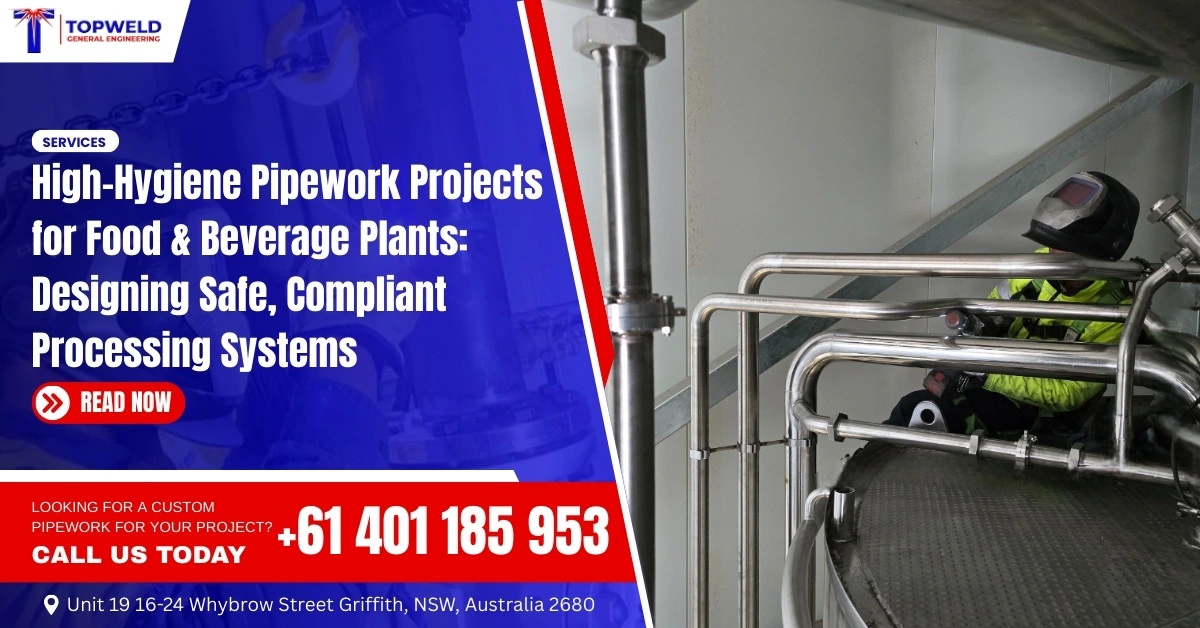
Building safe, compliant, and contamination-free processing systems
High-Hygiene pipework projects for food & beverage plants from the backbone of safe, compliant, and efficient processing operations. In facilities that handle consumable products, pipework does more than transport liquids and ingredients. It directly influences hygiene standards, product quality, regulatory compliance, and operational reliability.
Food and beverage plants across NSW, including facilities in Griffith, Leeton, and the wider Riverina region, operate under strict food and safety regulations. Any failure in hygienic pipework design or fabrication can introduce contamination risks, compromise product integrity, and disrupt production. For this reason, hygienic pipework systems demand specialist engineering, precision fabrication, and disciplined installation practices.
The article explains what defines hygienic pipework, why these systems are critical to food and beverage processing, and how properly executed high-hygiene pipework projects for food & beverage plants support safely, compliance, and long-term performance.
why high-hygiene pipework projects for food & beverage plants matter
High-hygiene pipework refers to piping systems designed and fabricated to prevent contamination support effective cleaning, and maintain product integrity. These systems typically carry liquids such as milk, juices, wine, beer, syrups, water, and cleaning solutions. Because the pipework comes into direct contact with consumable products, every design and fabrication decision influences hygiene outcomes.
High-hygiene pipework projects for food & beverage plants focus on:
- Smooth internal surfaces that prevent bacterial growth
- Fully welded joints that eliminate crevices and dead zones
- Cleanable layouts that support CIP (Clean-in-Place) systems
- Material selection that resists corrosion and chemical attack
In hygienic processing environments, pipework must support both production efficiency and sanitation effectiveness. Poorly designed systems trap product residue, increase cleaning time, and elevate contamination risks. Well-designed hygienic pipework improves process consistency and reduces operational risk.
Why High-Hygiene Pipework Projects for Food & Beverage Plants Matter
Food safety regulations place significant responsibility on plant operators to control contamination risks. Pipework failures often create hidden hygiene issues because contaminants can build up inside poorly designed or poorly welded systems.
High-hygiene pipework projects for food & beverage plants play a critical role in:
- Protecting product quality and consumer safety
- Supporting compliance with food safety standards and audits
- Reducing downtime caused by cleaning inefficiencies
- Improving process efficiency and yield consistency
When pipework systems support reliable cleaning and sanitary operation, plants operate more efficiently and maintain consistent quality standards. Conversely, substandard hygienic pipework often leads to recurring contamination risks, frequent maintenance, and compliance challenges.
High-Hygiene Pipework Projects for Food & Beverage Plants and Regulatory Compliance
Regulatory frameworks governing food processing require facilities to demonstrate effective hygiene controls across all product-contact surfaces. Pipework forms a large portion of these contact surfaces, making its design and fabrication central to compliance.
High-hygiene pipework projects for food & beverage plants must align with:
- Food safety and hygiene standards
- Workplace health and safety obligations
- Industry-specific processing guidelines
- Audit and certification requirements
Fabrications must design systems that allow full drainage, minimise stagnation points, and support complete cleaning cycles. Compliance does not rely solely on materials; it depends on disciplined fabrication and installation practices that deliver consistent hygienic outcomes.
Materials used in high-hygiene pipework systems
Stainless steel remains the primary material for hygienic pipework due to its corrosion resistance, cleanability, and durability. Food and beverage plants rely on stainless piping systems to maintain sanitary conditions throughout production cycles.
- Resistance to cleaning chemicals and sanifisers
- Structural strength under thermal cycling
- Long-term corrosion protection
- Compatibility with food-grade processing requirements
Fabricators must manage welding heat input carefully to preserve material properties and prevent surface degradation. Poor welding practices compromise corrosion resistance and create surface irregularities that undermine hygiene performance.
For integrated systems, hygiene pipework connects directly with stainless steel pipe and tube fabrication, reinforcing the importance of specialist fabrication capabilities.
Welding Quality in High-Hygiene Pipework Projects for Food & Beverage Plants
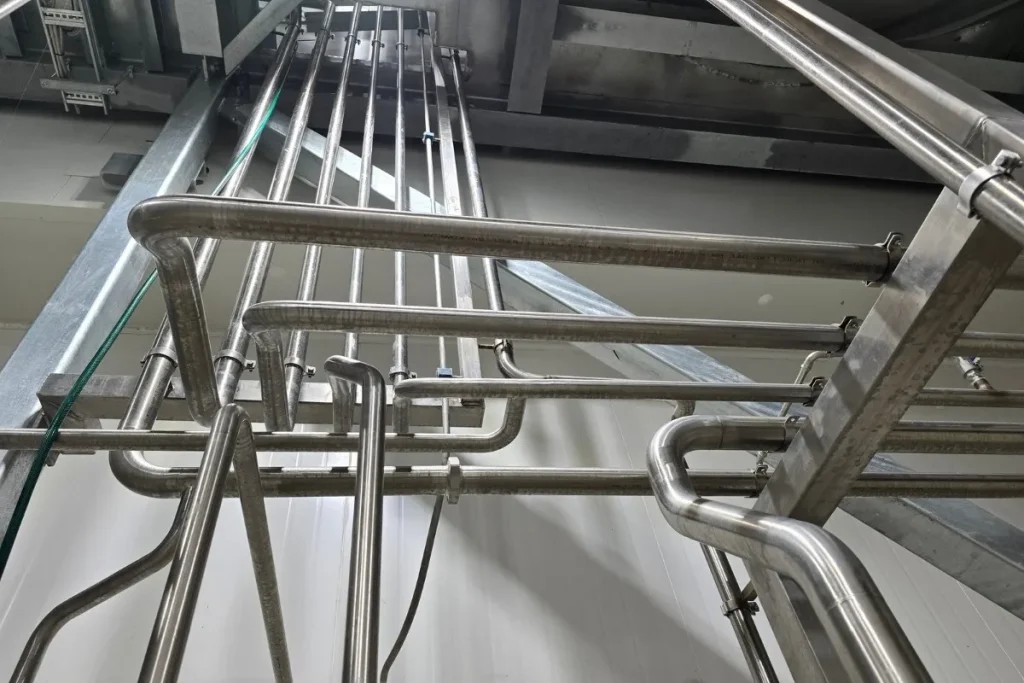
Welding quality determines whether pipework performs as a hygienic system or becomes a contamination risk. High-hygiene pipework projects for food & beverage plants require full-penetration welds with smooth internal profiles that allow uninterrupted product flow and complete cleaning.
Fabricators must apply:
- Controlled welding procedures
- Precise joint preparation
- Consistent weld profiles
- Post-weld finishing where required
Hygienic welding techniques ensure that internal weld surfaces remain smooth and free from crevices that trap product residue. Facilities that invest in high-quality hygienic welding reduce long-term cleaning burdens and contamination risk. This discipline aligns closely with hygienic welding practices, which focus on contamination prevention at the joint level.
Design Principles for High-Hygiene Pipework Projects for Food & Beverage Plants
Design shapes how effectively a pipework system support hygiene and operational efficiency. High-hygiene pipework projects for food & beverage plants require careful planning to eliminate dead legs, promote full drainage, and ensure consistent flow patterns.
Effective hygienic pipework design considers:
- Pipe routing to avoid stagnant
- Appropriate slopes to support drainage
- Strategic placement of values and fittings
- Access for inspection and maintenance
Design teams must collaborate closely with fabrication teams to ensure that hygienic principles translate accurately into the finished installation. Poor design compromises even the best fabrication work.
Integration With Processing Equipment and Tanks
Pipework rarely operates in isolation. It connects directly to process tanks,
mixing vessels, heat exchangers, and packaging systems. High-hygiene pipework projects for food & beverage plants must integrate seamlessly with these components to maintain sanitary conditions across the entire process chain.
- Consistent product transfer
- Effective CIP system operation
- Reduced contamination risk at interfaces
- Simplified maintenance and inspection
Facilities benefit when pipework aligns with stainless steel tank fabrication and vessel design principles, creating a cohesive hygienic processing system rather than a series of disconnected components.
Inspection and Quality assurance in hygienic pipework systems
Inspection and quality assurance play a central role in validating hygienic pipework performance. High-hygiene pipework projects for food & beverage plants require verification that welds, finishes, and layouts meet hygienic design expectations.
Quality assurance activities typically include:
- Visual inspection of internal and external weld profiles
- Verification of material grades
- Review of fabrication documentation
- Assessment of cleanability and drainage performance
These steps support regulatory compliance and provide confidence that the system can operate safely within food processing environments. Facilities that document pipework quality reduce risk during audits and certification processes.
Maintenance and Long-Term Performance of Hygienic Pipework
Even well-designed hygienic pipework systems require disciplined maintenance. High-hygiene pipework projects for food & beverage plants must account for long-term performance under continuous cleaning cycles, thermal expansion, and operational wear.
Facilities must implement maintenance programs that include:
- Regular inspection of welds and joints
- Monitoring for corrosion or surface degradation
- Verification of CIP effectiveness
- Timely repair of damaged sections
Such programs align with broader industrial maintenance and repair strategies that protect critical processing assets and extend service life.
High-Hygiene Pipework Projects for Food & Beverage Plants in Regional NSW
Food and beverage plants in regional NSW face unique operational pressures. Seasonal production cycles, continuous processing demands, and exposure to aggressive cleaning regimes place ongoing strain on hygienic pipework systems.
High-hygiene pipework projects for food & beverage plants in areas such as Griffith and Leeton benefit from local fabrication expertise that understands regional processing environments. Local specialists can production schedules and compliance requirements.
Retrofitting and Upgrading Existing Hygienic Pipework Systems
Not all facilities operate with modern hygienic pipework systems. Older plants often require upgrades to meet current hygiene and compliance expectations. High-hygiene pipework projects for food & beverage plants frequently involve retrofitting existing systems to improve cleanability, flow efficiency, and regulatory compliance.
Upgrades may include:
- Replacing outdated pipe sections
- Reconfiguring layouts to eliminate dead legs
- Improving weld quality and critical joints
- Integrating modern CIP capabilities
Such upgrades allow facilities to improve hygiene performance without complete system replacement, supporting operational continuity and cost control.
Operational Benefits of Well-Executed Hygienic Pipework Projects
When facilities invest in high-quality hygienic pipework, they achieve measurable operational benefits. High-hygiene pipework projects for food & beverage plants improve cleaning efficiency, reduce product loss, and support consistent quality outcomes.
Operational benefits include:
- Faster and more effective cleaning cycles
- Reduce contamination risk
- Improve product consistency
- Lower long-term maintenance costs
These benefits support competitive production in regulated food & beverage markets, where quality and compliance directly influence business sustainability.
A Disciplined Approach to High-Hygiene Pipework Projects for Food & Beverage Plants
Successful hygienic pipework projects follow a disciplined, system-based approach. Fabricators and project teams must coordinate design, material selection, welding, inspection, and installation to deliver compliant, reliable systems.
High-hygiene pipework projects for food & beverage plants typically progress through:
- Design review and hygienic assessment
- Material preparation and controlled fabrication
- Precision welding and finishing
- Inspection and quality verification
- Commissioning and integration with CIP systems
- Design review and hygienic assessment
This structured approach ensures that hygienic intent carries through from design to operation.
High-Hygiene Pipework Solutions at TOPWELD General Engineering
At the conclusion of any hygienic pipework project, fabrication quality determines long-term performance. TOPWELD GENERAL ENGINEERING PTY LTD delivers high-hygiene pipework projects for food & beverage plants across Griffith, Leeton, and the wider Riverina region, aligning fabrication with industry best practices and compliance requirements.
With expertise in custom stainless steel fabrication, hygienic welding, and industrial pipework systems, Topweld supports food and beverage processors with solutions focused on safety, durability, and operational reliability.
Supporting Safe Food Processing Across the Riverina
High-hygiene pipework projects for food & beverage plants underpin safe and efficient food processing operations. As regulatory expectations evolve and production demands increase, facilities require hygienic pipework systems that deliver consistent performance and compliance.
By prioritising hygienic design, precision fabrication, and disciplined maintenance, food and beverage plants across NSW strengthen product safety, protect brand reputation, and support long-term operational success.