Why Compliance, Precision, and Experience Matter?
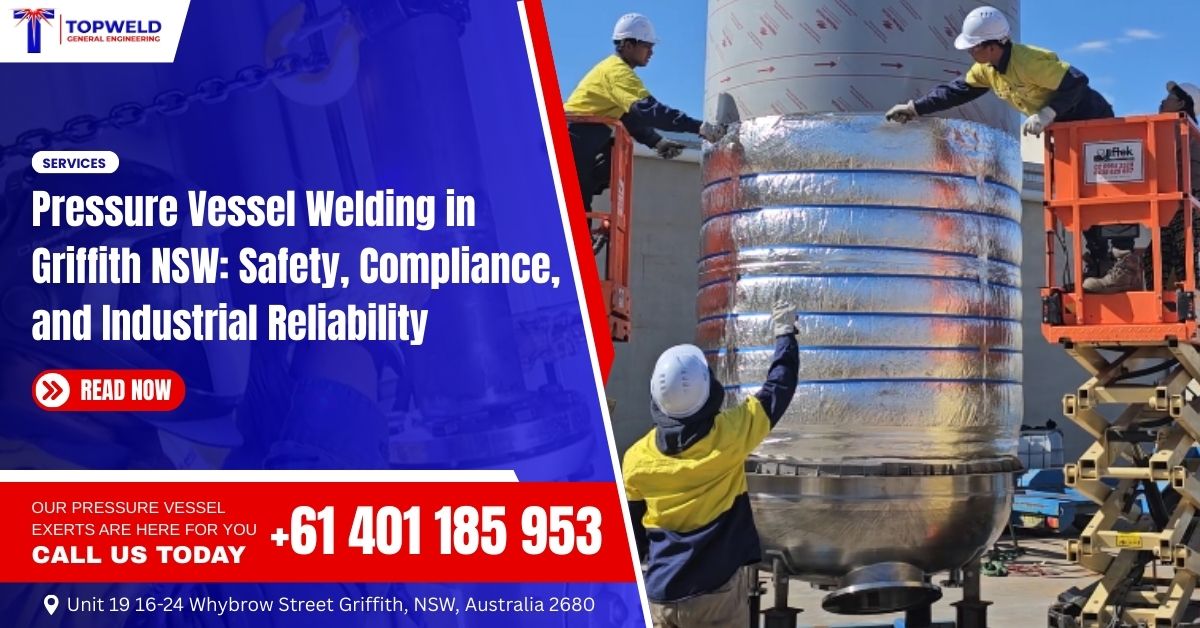
Pressure vessel welding in Griffith NSW is a specialised engineering discipline that supports many of the Riverina region’s essential industries. From food and beverage processing to agriculture, manufacturing, and industrial operations, pressure vessels play a critical role in systems that rely on controlled pressure and temperature.
Unlike general fabrication work, pressure vessel welding carries elevated safety and regulatory obligations. These vessels are designed to contain fluids or gases under pressure, making weld integrity a critical factor in both operational reliability and workplace safety.
In regional centers such as Griffith and Leeton, where facilities often operate continuously or seasonally, pressure equipment must perform reliably under sustained demand.
Understanding Pressure Vessels and Their Industrial Function
A pressure vessel is a container designed to hold gases or liquids at pressures significantly different from atmospheric pressure. These vessels are engineered to withstand mechanical stress, thermal cycling, and internal pressure over long service periods.
In the Riverina region, pressure vessels are commonly used in:
- Food and beverage processing systems
- Abattoirs and meat processing facilities
- Dairy production plants
- Wineries and breweries
- Industrial manufacturing and processing operations
Because many of these environments operate under strict hygiene, safety, and compliance requirements, pressure vessel construction must meet exacting engineering standards.
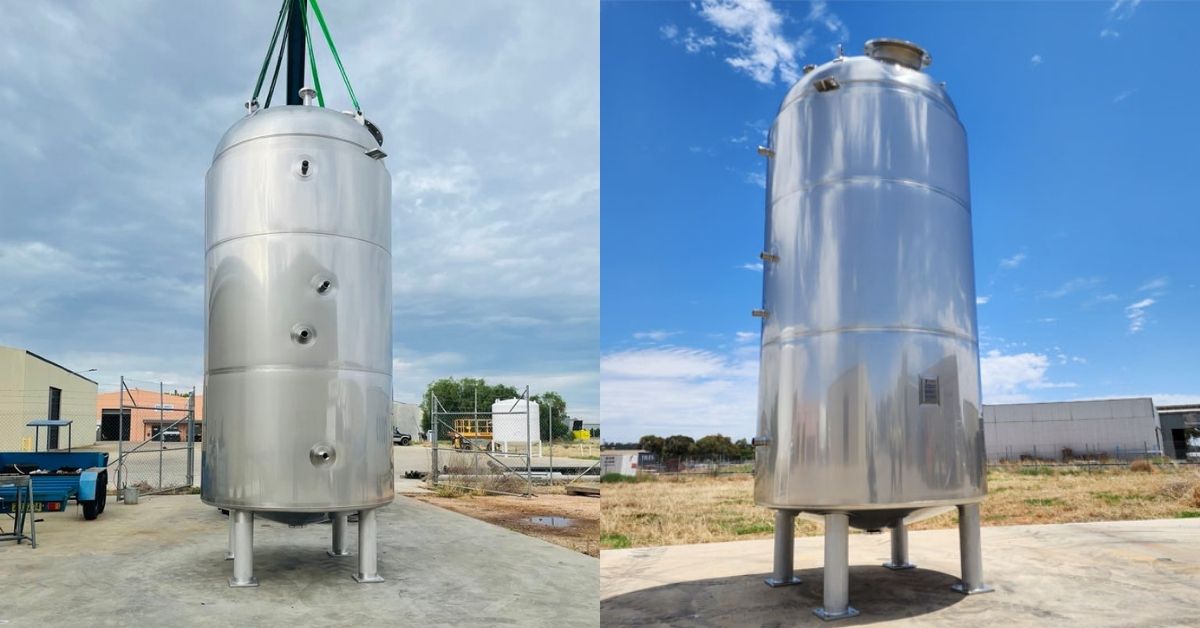
Why Pressure Vessel Welding Requires Specialist Expertise
Pressure vessel welding involves far more than joining metal components. It requires precise control of heat input, joint preparation, and welding sequence to ensure structural integrity throughout the vessel.
Pressure vessel welding in Griffith NSW must account for:
- Internal pressure loads and stress distribution
- Material behaviour under heat and pressure
- Long-term fatigue and corrosion resistance
Even minor welding defects can compromise a vessel once it enters service. For this reason, pressure vessel welding is governed by approved welding procedures and performed by qualified personnel with experience in pressure-rated systems.
Australian Standards and Regulatory Requirements
In Australia, pressure vessels are regulated under strict standards to minimise safety risks and ensure consistent quality. The primary governing standard is AS 1210 – Pressure Vessels, supported by additional welding and qualification standards.
These standards define requirements relating to:
- Design and material selection
- Welding procedure qualification
- Welder competency and certification
- Inspection, testing, and documentation
For operators in Griffith and surrounding NSW regions, compliance is essential for meeting workplace safety obligations, insurance requirements, and regulatory audits.
Materials Commonly Used in Pressure Vessel Fabrication
Material selection directly influences how a pressure vessel performs throughout its service life. Stainless steel is widely used in food, dairy, beverage, and pharmaceutical applications due to its corrosion resistance and hygienic properties. Welding stainless steel pressure vessels requires precision to maintain clean internal surfaces and prevent distortion.
Carbon steel and low-alloy steels are often selected for industrial and manufacturing applications where strength and durability are priorities. Each material responds differently to heat input, reinforcing the need for welding procedures tailored to the specific vessel design and operating conditions.
This material-specific knowledge is central to achieving reliable pressure vessel welding in Griffith NSW.
Inspection and Quality Assurance in Pressure Vessel Welding
Inspection and quality assurance are fundamental to pressure vessel fabrication and repair. Visual inspection alone is rarely sufficient, particularly for vessels operating under elevated pressure or temperature.
Depending on the application, quality assurance may include:
- Visual weld inspection
- Non-destructive testing such as dye penetrant or radiographic testing
- Dimensional verification and documentation review
Equally important is record keeping. Welding procedures, inspection reports, and compliance documentation provide traceability and assurance that the vessel meets applicable Australian Standards.
Risks of Inadequate Pressure Vessel Welding
Poor-quality pressure vessel welding can lead to serious operational and safety consequences. Weld failures may result in leaks, loss of containment, or sudden rupture, placing personnel and facilities at risk.
Beyond safety concerns, inadequate welding can cause:
- Unplanned equipment shutdowns
- Production delays or losses
- Increased maintenance and repair costs
- Non-compliance with regulatory requirements
These risks highlight why pressure vessel welding in Griffith NSW must be treated as a critical engineering task rather than routine fabrication work.
Regional Considerations for Pressure Vessel Welding in Griffith NSW
The Riverina’s industrial landscape presents unique challenges. Seasonal processing, continuous operation, and varying environmental conditions place ongoing demands on pressure equipment reliability.
Local expertise plays an important role in addressing these challenges. Professionals experienced in pressure vessel welding in Griffith NSW understand the operational realities of regional industries and the standards they must meet. This regional familiarity supports practical, compliant solutions tailored to local conditions.
Repair and Modification of Existing Pressure Vessels
In many cases, pressure vessels can be repaired or modified rather than replaced. Certified repair work may include crack repairs, nozzle replacements, or structural modifications to suit updated operational requirements.
Such work requires careful assessment to ensure the vessel remains compliant and fit for service. Controlled welding procedures and appropriate inspection are essential to extending the safe working life of pressure equipment.
A Disciplined Approach to Pressure Vessel Welding
Pressure vessel welding is defined by precision, consistency, and accountability. Every stage—from design review to final inspection—contributes to the vessel’s ability to operate safely under pressure.
Pressure vessel welding in Griffith NSW benefits from this disciplined approach, particularly in industries where equipment reliability directly affects productivity and safety outcomes.
Pressure Vessel Welding Solutions at TOPWELD General Engineering
At the conclusion of any pressure vessel project, the quality of workmanship and compliance processes determines long-term performance. TOPWELD GENERAL ENGINEERING PTY LTD, based in Griffith NSW, provides pressure vessel welding services aligned with Australian Standards and industry best practices.
With experience across stainless steel fabrication, industrial welding, and pressure systems, Topweld supports businesses throughout Griffith, Leeton, and the wider Riverina region with technically sound, compliance-focused solutions.