Precision-Engineered Solutions for Industrial Processing Environments
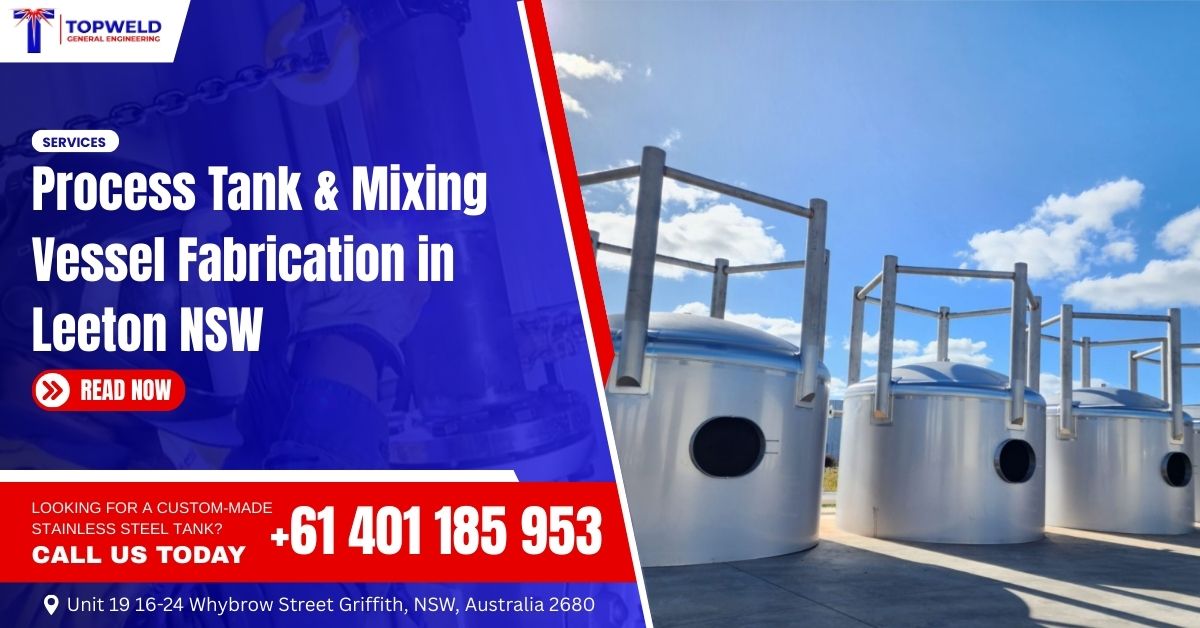
Process tank & mixing vessel fabrication in Leeton NSW plays a vital role in supporting the Riverina’s food, agricultural, and industrial sectors. From dairy processing and wineries to manufacturing and chemical handling, businesses rely on well-designed tanks and vessels to control mixing, heating, cooling, and storage processes with consistency and safety.
These vessels do more than hold product. They directly influence product quality, hygiene outcomes, energy efficiency, and production reliability. For this reason, process tanks and mixing vessels demand a level of engineering and stainless steel fabrication precision that goes well beyond general metalwork.
In Leeton and surrounding Riverina towns, where production schedules often run continuously or seasonally, businesses depend on fabrication solutions that deliver durability, compliance, and long-term performance.
Understanding Process Tanks and Mixing Vessels in Industrial Operations
Process tanks and mixing vessels are engineered containers designed to support specific industrial processes. They may store raw materials, blend ingredients, maintain temperature, or support chemical reactions. Each vessel must suit the product it handles, the operating environment, and the production workflow.
Process tank & mixing vessel fabrication in Leeton NSW commonly supports industries such as:
Food and beverage processing
Dairy production and milk handling
Wineries and breweries
Agricultural processing
Pharmaceutical and chemical manufacturing
General industrial production
Unlike standard storage tanks, process and mixing vessels often include internal components such as agitators, baffles, heating jackets, or spray systems. These features demand careful design integration during fabrication to ensure efficiency, hygiene, and structural integrity.
Why Process Tank & Mixing Vessel Fabrication Requires Specialist Engineering
Process tank & mixing vessel fabrication in Leeton NSW requires a detailed understanding of mechanical design, material behavior, and production requirements. Fabricators must consider how product flows through the vessel, how it mixes, and how the vessel responds to temperature and pressure changes.
Fabrication teams must address several critical factors, including:
Structural loads during mixing and agitation
Thermal expansion during heating or cooling cycles
Hygienic design requirements for food and dairy applications
Chemical compatibility with vessel materials
Long-term fatigue and corrosion resistance
Poorly designed or fabricated vessels can lead to inconsistent mixing, product contamination, excessive wear, or costly downtime. For processing facilities operating under strict quality and safety controls, these risks are unacceptable.
Process Tank & Mixing Vessel Fabrication in Leeton NSW for Food and Dairy Processing
Food and dairy processing facilities across Leeton and the wider Riverina region rely heavily on hygienic process tanks and mixing vessels. These environments demand smooth internal surfaces, clean welds, and designs that prevent bacterial growth and product contamination.
Process tank & mixing vessel fabrication in Leeton NSW for food and dairy applications must align with hygienic design principles. Fabricators must eliminate crevices, ensure full weld penetration, and achieve consistent surface finishes that support effective cleaning and sanitation.
In dairy processing, for example, mixing vessels may handle milk, cream, or cultured products under controlled temperature conditions. Any defect in fabrication can compromise product quality or shelf life, reinforcing the importance of precision workmanship.
The Role of Stainless Steel in Process Tank Fabrication
Stainless steel remains the most widely used material for stainless steel process tank and mixing vessel fabrication, particularly in food, beverage, and pharmaceutical environments. Its corrosion resistance, strength, and cleanability make it ideal for hygienic processing systems.
Process tank & mixing vessel fabrication in Leeton NSW often uses stainless steel grades selected to suit the application, operating temperature, and cleaning regime. Fabricators must manage heat input carefully during welding to preserve corrosion resistance and prevent distortion.
Proper stainless steel fabrication also supports long-term performance by reducing maintenance requirements and extending service life, especially in high-use processing environments.
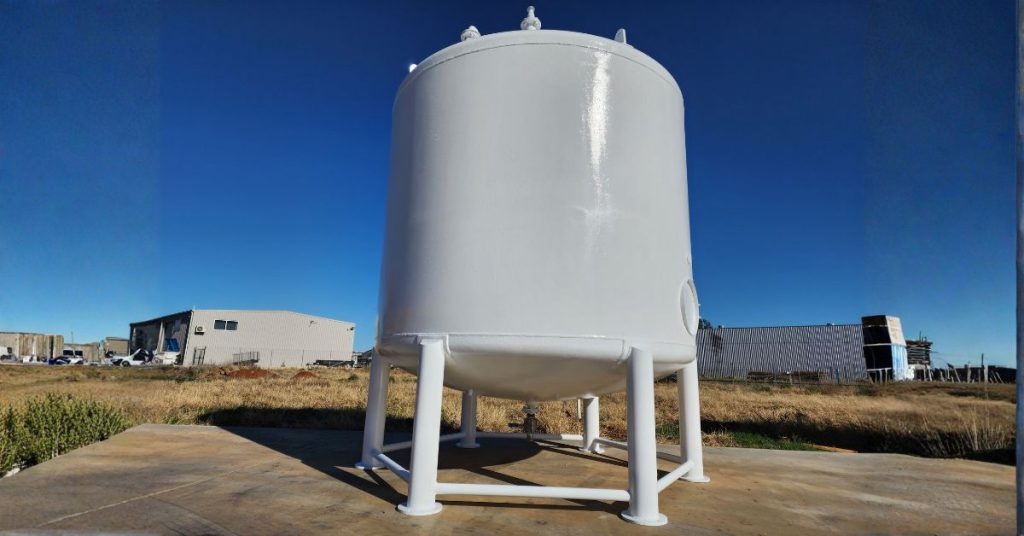
Carbon Steel and Specialty Materials for Industrial Applications
While stainless steel dominates hygienic processing, carbon steel and specialty alloys remain important in many industrial applications. These materials may suit vessels used for non-food products, chemical processing, or high-strength requirements.
Process tank & mixing vessel fabrication in Leeton NSW involving carbon steel demands strict control of welding procedures to prevent cracking, distortion, or premature failure. Material selection must align with the product handled, operating conditions, and environmental exposure.
Experienced fabricators assess these factors early in the design stage to ensure the vessel performs reliably throughout its intended lifespan.
Design Considerations in Process Tank & Mixing Vessel Fabrication
Effective vessel fabrication begins with sound design. Process tank & mixing vessel fabrication in Leeton NSW requires close attention to how the vessel integrates into the broader production system.
Key design considerations include:
Vessel capacity and geometry
Mixing efficiency and flow patterns
Integration of agitators, inlets, and outlets
Access for cleaning, inspection, and maintenance
Compatibility with existing pipework and systems
A well-designed vessel improves process efficiency, reduces energy consumption, and supports consistent product outcomes. Fabricators must balance functional requirements with fabrication practicality and compliance obligations.
Welding Quality and Its Impact on Vessel Performance
Welding quality directly influences the performance and reliability of process tanks and mixing vessels. Inconsistent welds can create weak points, disrupt product flow, or compromise hygiene standards.
Process tank & mixing vessel fabrication in Leeton NSW requires controlled welding procedures that deliver:
Full weld penetration
Smooth internal profiles
Minimal distortion
Consistent strength across joints
Fabricators must select welding techniques that suit the vessel material, thickness, and design complexity. Skilled welders play a crucial role in ensuring that vessels perform as intended once installed.
Inspection and Quality Assurance in Vessel Fabrication
Inspection and quality assurance form an essential part of process tank & mixing vessel fabrication in Leeton NSW. Fabricators must verify that vessels meet design specifications, material requirements, and applicable standards.
Quality assurance activities often include:
Visual inspection of welds and surfaces
Dimensional checks against design drawings
Verification of material grades
Review of fabrication and welding records
For hygienic or regulated industries, documentation provides confidence that vessels meet safety and quality expectations and can support audit requirements.
Process Tank & Mixing Vessel Fabrication for Wineries and Breweries
Leeton and the broader Riverina region support a growing wine and beverage sector. Process tanks and mixing vessels play a central role in fermentation, blending, and product handling.
Process tank & mixing vessel fabrication in Leeton NSW for wineries and breweries focuses on temperature control, cleanliness, and gentle handling of product. Vessel design must support consistent fermentation conditions while allowing for effective cleaning between batches.
Fabrication quality directly affects flavor consistency, product stability, and production efficiency, making vessel integrity a critical consideration for producers.
Repair and Modification of Existing Process Tanks and Vessels
Not all process tanks require replacement when operational needs change. In many cases, fabricators can modify or repair existing vessels to suit updated production requirements.
Process tank & mixing vessel fabrication in Leeton NSW often includes:
Capacity modifications
Addition or relocation of nozzles
Structural reinforcement
Repair of worn or damaged sections
Such work requires careful assessment to ensure the vessel remains structurally sound and fit for service. Skilled fabrication extends asset life and reduces capital expenditure for processing facilities.
Regional Considerations for Fabrication in Leeton NSW
Leeton’s industrial environment presents unique challenges. Seasonal production peaks, continuous processing, and exposure to cleaning chemicals place ongoing demands on equipment reliability.
Process tank & mixing vessel fabrication in Leeton NSW benefits from local expertise that understands these operational realities. Fabricators familiar with regional industries can deliver practical solutions that align with production schedules and compliance expectations.
Local capability also supports better communication, site-specific assessments, and responsive service throughout the fabrication lifecycle.
The Importance of Fabrication Precision in Processing Efficiency
Precision fabrication directly influences processing efficiency. Poorly fabricated vessels can create dead zones, uneven mixing, or temperature inconsistencies that affect product quality.
Process tank & mixing vessel fabrication in Leeton NSW must prioritise accuracy at every stage, from layout and cutting to welding and finishing. Precision workmanship supports consistent process outcomes, reduces waste, and improves overall system performance.
For processing facilities, these benefits translate into higher yields, improved product consistency, and lower operating costs.
A Structured Approach to Process Tank & Mixing Vessel Fabrication
Successful vessel fabrication follows a structured and methodical approach. Fabricators must coordinate design, material selection, welding, and inspection to deliver reliable outcomes.
Process tank & mixing vessel fabrication in Leeton NSW typically progresses through:
Design review and engineering assessment
Material preparation and cutting
Controlled welding and assembly
Inspection and quality verification
Final finishing and preparation for installation
This disciplined process ensures vessels meet performance expectations and integrate seamlessly into existing systems.
Process Tank & Mixing Vessel Fabrication Solutions at TOPWELD General Engineering
At the conclusion of any processing project, vessel quality determines long-term reliability. TOPWELD GENERAL ENGINEERING PTY LTD, serving Leeton NSW and the wider Riverina region, provides process tank and mixing vessel fabrication aligned with Australian industry standards and best practices.
With experience across stainless steel fabrication, hygienic welding, and industrial vessel construction, Topweld supports food, dairy, beverage, and manufacturing facilities with solutions focused on durability, safety, and operational efficiency.