Stainless Steel Tank Repair vs Replacement: How to Make the Right Decision for Industrial Facilities

Topweld Expert Welders Repair Stainless Steel Tank for a Food & Beverage Company

Stainless steel tanks are critical assets across food processing plants, wineries, dairies, pharmaceutical facilities, and chemical operations throughout Griffith, Leeton, and the wider Riverina region. These tanks are designed to deliver long service life, corrosion resistance, and hygienic performance. However, even high-grade stainless steel equipment degrades over time due to operational stress, chemical exposure, thermal cycling, and mechanical wear.

A common question faced by plant managers and maintenance engineers is whether a deteriorating tank should undergo repair or be fully replaced. The decision between stainless steel tank repair vs replacement is not purely financial. It involves evaluating structural integrity, compliance with Australian standards, production risk, hygiene requirements, and long-term lifecycle cost.

This guide provides a practical, engineering-informed framework to help industrial operators determine the most appropriate course of action when their stainless steel tanks show signs of deterioration. The objective is to support safe, compliant, and cost-effective decision-making rather than short-term fixes that may introduce operational risk.

Why the Repair vs Replacement Decision Is Operationally Critical

Industrial stainless steel tanks play a direct role in production continuity, product quality, and workplace safety. When a tank begins to fail, the consequences extend beyond the cost of repair or replacement itself.

Production downtime can escalate rapidly if a tank develops leaks, loses pressure integrity, or becomes unsafe for hygienic use. In food and beverage environments, surface degradation can create contamination risks that compromise product safety and regulatory compliance. In chemical and pharmaceutical processing, corrosion-related failures introduce both safety and environmental hazards.

Choosing to repair a tank that is structurally compromised can expose facilities to unplanned shutdowns and safety incidents. Conversely, replacing a tank prematurely without technical justification may result in unnecessary capital expenditure. The decision between stainless steel tank repair vs replacement therefore requires careful evaluation based on technical condition, regulatory requirements, and operational priorities.
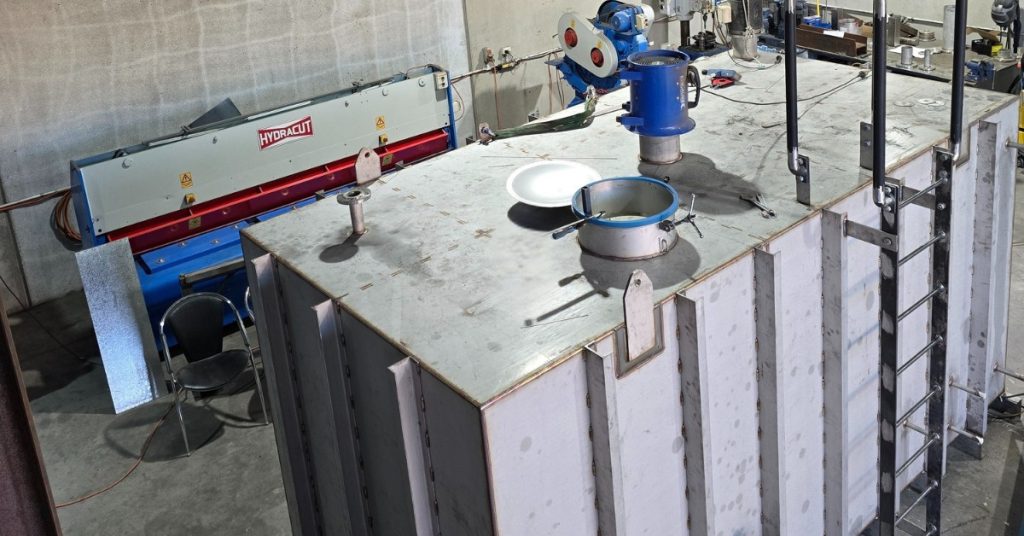
A stainless steel tank from a brewery company being repaired in Topweld shop

Common Causes of Stainless Steel Tank Degradation

Understanding why stainless steel tanks degrade helps determine whether repair remains viable or replacement is more appropriate.

1. Corrosion and Pitting

Although stainless steel is corrosion resistant, it is not corrosion-proof. Aggressive cleaning chemicals, chloride exposure, acidic products, and high-temperature washdown cycles can damage passive layers and initiate pitting. Over time, localised corrosion can reduce wall thickness and compromise structural safety, particularly in tanks exposed to harsh process environments.

2. Weld Fatigue and Micro-Cracking

Welded joints are natural stress concentrators. Repeated thermal expansion and contraction, pressure cycling, and vibration can cause fatigue cracking in weld zones. While small cracks may be repairable, progressive weld degradation often signals that the tank is approaching the end of its safe service life.

3. Mechanical Damage and Deformation

Forklift impact, foundation movement, or internal pressure fluctuations can distort tank geometry. Even minor deformation may affect drainage performance, cleaning effectiveness, and pressure ratings. Structural distortion is often a key indicator that replacement should be considered rather than ongoing repair.

4. Hygienic Surface Degradation

In food, beverage, and dairy processing, surface finish integrity is essential for cleanability and microbial control. Scratches, erosion, and chemical etching can create harbourage points for bacteria. Once surface degradation exceeds hygienic tolerances, repair options become limited and replacement may be the only compliant solution.

When Stainless Steel Tank Repair Is Technically Appropriate

There are scenarios where stainless steel tank repair remains a practical and responsible solution, particularly when the tank is structurally sound and compliant with current operational requirements.

1. Localised Surface Corrosion Without Structural Penetration

Where corrosion is confined to surface layers and has not compromised wall thickness, repair is often feasible. Surface restoration processes, including mechanical cleaning, passivation, and surface finishing, can restore corrosion resistance and hygienic performance. This approach is commonly viable for tanks used in food processing environments where chemical exposure is the primary degradation mechanism.

2. Isolated Weld Defects or Fatigue Cracking

Weld repairs can be undertaken where cracking is localised and the surrounding material remains within acceptable thickness tolerances. Properly executed repairs should be performed in accordance with applicable Australian welding standards and followed by inspection and testing. Where tanks form part of integrated systems, associated pipework and support structures may also require inspection. In these cases, coordination with Structural Fabrication & Welding is often relevant.

3. Failure of Nozzles, Fittings, or Ancillary Components

Failures involving manways, inlet and outlet nozzles, gaskets, or flanges are typically repairable without full tank replacement. These components experience wear due to frequent connection cycles and thermal expansion. Replacing fittings can extend tank service life where the vessel shell itself remains structurally sound.

4. Continued Compliance With Regulatory and Hygienic Standards

If inspection confirms that the tank continues to meet hygiene requirements, pressure ratings, and applicable Australian Standards, repair may be justified. In these situations, targeted maintenance work coordinated with Industrial Maintenance & Repairs can restore operational reliability without introducing unnecessary capital expenditure.
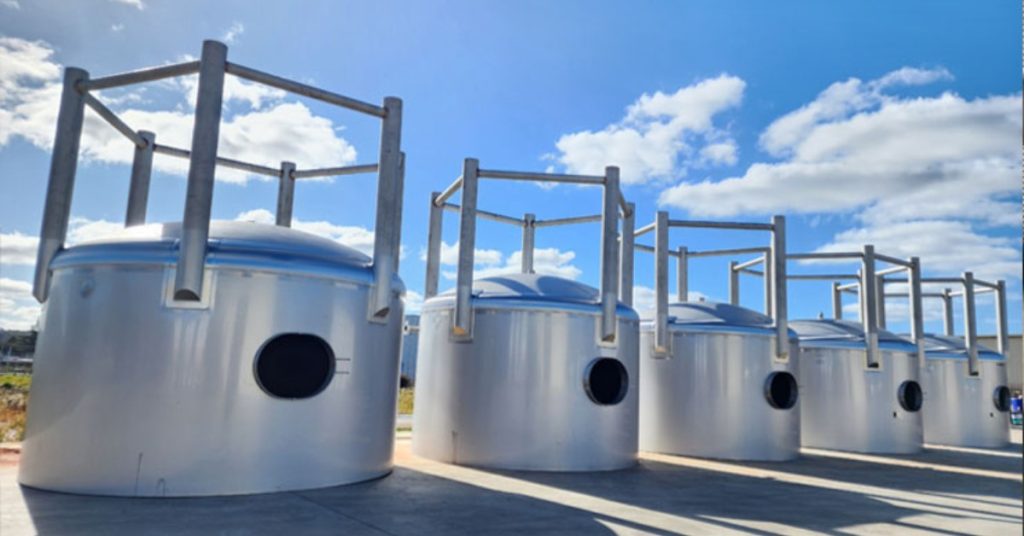
A custom-fabricated stainless steel tank to replace old tanks in a winery plant.

When Stainless Steel Tank Replacement Becomes the Safer Option

There are circumstances where replacement is not only more economical over the long term but also necessary from a safety and compliance perspective.

1. Structural Compromise and Loss of Wall Thickness

When corrosion penetrates deeply or wall thickness falls below design tolerances, the tank no longer meets structural safety requirements. Welding repairs in such cases may provide short-term remediation but cannot restore original structural integrity. Replacement becomes the only technically sound option to mitigate failure risk.

2. Escalating Maintenance and Repeated Repair Cycles

A pattern of frequent repairs is a strong indicator that a tank has reached the end of its economic service life. Ongoing maintenance costs, compounded by repeated downtime, often exceed the long-term cost of replacement. In these scenarios, a lifecycle cost analysis frequently supports replacement as the more rational decision.

3. Non-Compliance With Current Standards

Regulatory requirements evolve over time, particularly in hygienic design and pressure equipment compliance. Older tanks may not meet current food safety, pharmaceutical, or pressure vessel standards. Continued operation of non-compliant equipment exposes facilities to audit failure, insurance complications, and operational risk. Where tanks fall under pressure equipment classifications, compliance considerations may necessitate engagement with Pressure Vessel Fabrication & Welding services.

4. Process Modifications and Capacity Expansion

Changes in production processes, throughput requirements, or product lines often render existing tanks unsuitable. Requirements for larger volumes, improved thermal control, modified inlet and outlet configurations, or upgraded surface finishes can make retrofitting impractical. In such cases, replacement with purpose-built vessels manufactured through Stainless Steel Tank Fabrication enables alignment with current and future operational needs.

Cost, Risk, and Lifecycle Considerations

The financial comparison between stainless steel tank repair vs replacement should extend beyond immediate cost. Short-term repair expenditure may appear attractive, but long-term costs associated with repeated downtime, quality risk, and compliance exposure often outweigh the upfront capital cost of replacement.

Lifecycle assessment should account for remaining service life, frequency of maintenance interventions, energy efficiency, cleaning efficiency, and the risk profile associated with failure. From an asset management perspective, replacement may represent a more stable investment where tanks form part of critical production infrastructure.

Inspection and Assessment: Establishing the Technical Baseline

A structured inspection process is essential to inform the repair versus replacement decision. This assessment typically involves non-destructive testing to evaluate wall thickness, visual examination of weld integrity, and inspection of surface condition relative to hygienic requirements. Pressure testing may be required where tanks operate under pressurised conditions.

Inspection outcomes should be documented and benchmarked against original design specifications and current compliance standards. This technical baseline provides the foundation for rational decision-making and capital planning.

Industry-Specific Decision Factors

Food, Beverage, and Dairy Processing

In hygienic processing environments, surface integrity and cleanability are paramount. Even minor surface degradation can compromise compliance with food safety standards. Repair is appropriate where hygienic finish can be fully restored. Replacement becomes necessary where surface degradation introduces contamination risk.

Wineries and Breweries

Temperature control, fermentation performance, and cleanability are central to product quality. Older tanks may lack the thermal performance or configuration required for modern production processes. Replacement may support improved consistency and process control.

Chemical and Pharmaceutical Facilities

Material compatibility and corrosion resistance are critical. Tanks exposed to aggressive chemicals may experience accelerated degradation. Where corrosion mechanisms exceed the limits of repair, replacement with appropriately specified materials is often the only compliant option.

Local Engineering Support and Operational Continuity

Engaging regional fabrication and maintenance specialists supports faster response times and reduces logistical complexity. Facilities in Griffith and Leeton benefit from access to locally based inspection and fabrication services capable of providing both repair and replacement options, including associated Tube & Pipe Fabrication & Installation where tank upgrades affect process connections.

Practical Framework for Decision-Making

The decision between stainless steel tank repair vs replacement should be guided by four core questions. Does the tank remain structurally sound within design tolerances? Does it comply with current regulatory and hygiene standards? Is the projected lifecycle cost of repair justified relative to replacement? Does the existing tank configuration align with current and future process requirements?

When these questions are assessed objectively, the appropriate course of action becomes clearer. Repair is appropriate where safety, compliance, and performance can be reliably restored. Replacement is warranted where risk, non-compliance, or escalating maintenance undermine operational reliability.

Where Topweld Fits in the Process

At the final stage of this decision-making process, facilities benefit from independent technical assessment and engineering-led recommendations. TOPWELD General Engineering Pty Ltd supports industrial operators across Griffith, Leeton, and the Riverina with inspection, repair, and custom fabrication services. The role of an experienced fabrication partner is to provide objective technical input to ensure that decisions around repair or replacement are based on safety, compliance, and long-term operational value rather than short-term expediency.
High-Hygiene Pipework Projects for Food & Beverage Plants: Designing Safe, Compliant Processing System

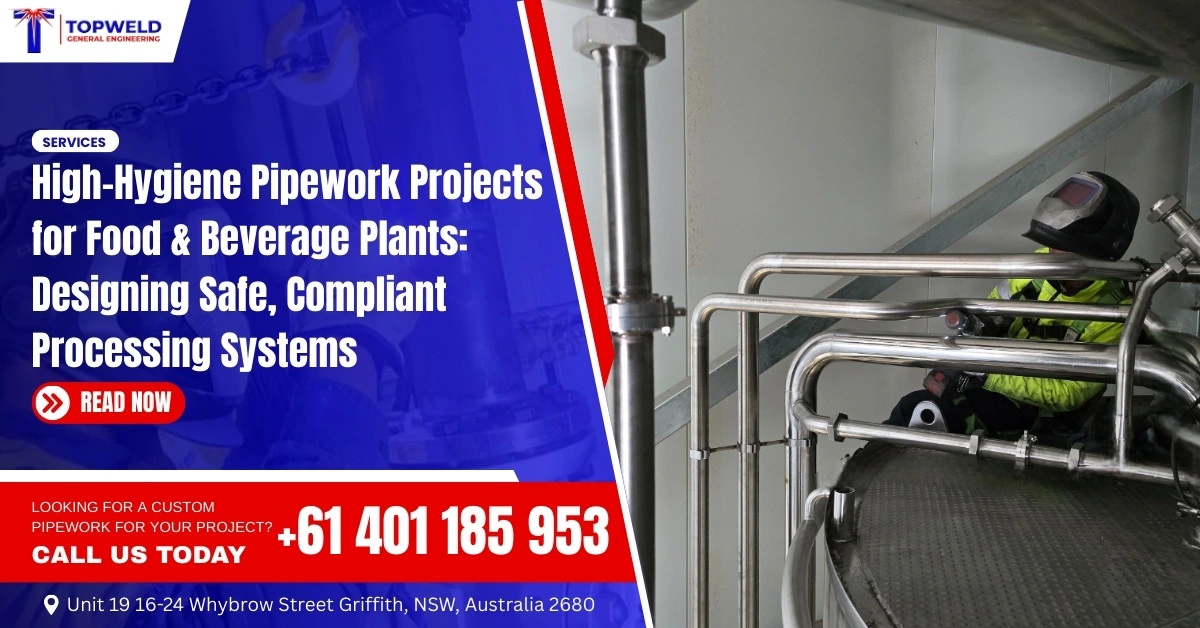
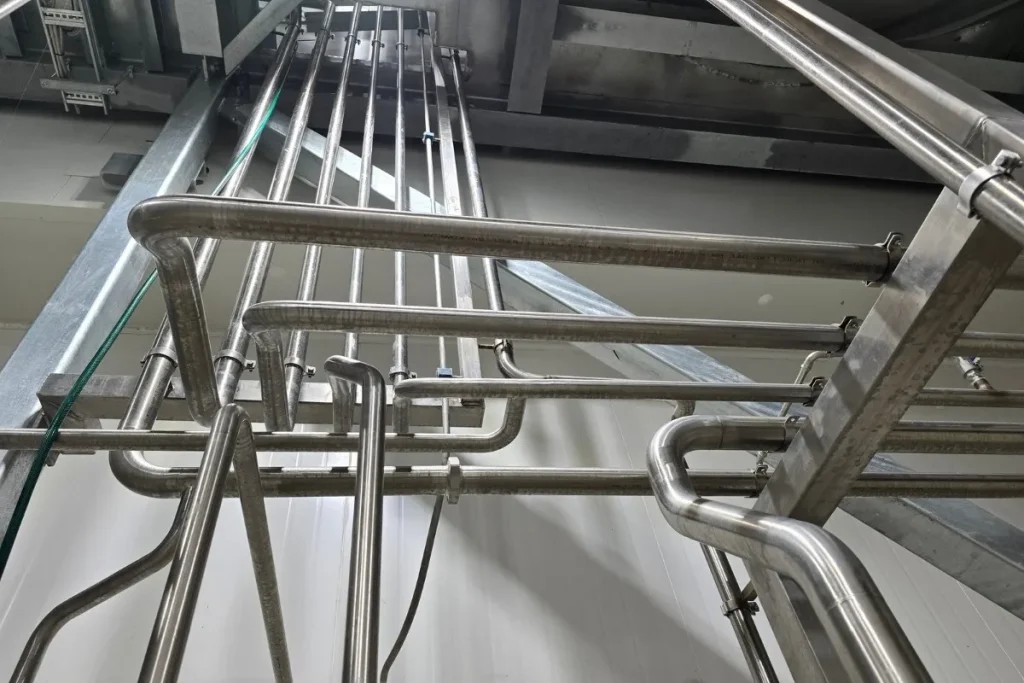
Pipeline work for food & beverage plant located at Griffith NSW by Topweld expert fabricators.

Building safe, compliant, and contamination-free processing systems

High-Hygiene pipework projects for food & beverage plants from the backbone of safe, compliant, and efficient processing operations. In facilities that handle consumable products, pipework does more than transport liquids and ingredients. It directly influences hygiene standards, product quality, regulatory compliance, and operational reliability.

Food and beverage plants across NSW, including facilities in Griffith, Leeton, and the wider Riverina region, operate under strict food and safety regulations. Any failure in hygienic pipework design or fabrication can introduce contamination risks, compromise product integrity, and disrupt production. For this reason, hygienic pipework systems demand specialist engineering, precision fabrication, and disciplined installation practices.

The article explains what defines hygienic pipework, why these systems are critical to food and beverage processing, and how properly executed high-hygiene pipework projects for food & beverage plants support safely, compliance, and long-term performance.

why high-hygiene pipework projects for food & beverage plants matter

High-hygiene pipework refers to piping systems designed and fabricated to prevent contamination support effective cleaning, and maintain product integrity. These systems typically carry liquids such as milk, juices, wine, beer, syrups, water, and cleaning solutions. Because the pipework comes into direct contact with consumable products, every design and fabrication decision influences hygiene outcomes.

High-hygiene pipework projects for food & beverage plants focus on:

    • Smooth internal surfaces that prevent bacterial growth
    • Fully welded joints that eliminate crevices and dead zones
    • Cleanable layouts that support CIP (Clean-in-Place) systems
    • Material selection that resists corrosion and chemical attack

In hygienic processing environments, pipework must support both production efficiency and sanitation effectiveness. Poorly designed systems trap product residue, increase cleaning time, and elevate contamination risks. Well-designed hygienic pipework improves process consistency and reduces operational risk.

Why High-Hygiene Pipework Projects for Food & Beverage Plants Matter

Food safety regulations place significant responsibility on plant operators to control contamination risks. Pipework failures often create hidden hygiene issues because contaminants can build up inside poorly designed or poorly welded systems.

High-hygiene pipework projects for food & beverage plants play a critical role in:

    • Protecting product quality and consumer safety
    • Supporting compliance with food safety standards and audits
    • Reducing downtime caused by cleaning inefficiencies
    • Improving process efficiency and yield consistency

When pipework systems support reliable cleaning and sanitary operation, plants operate more efficiently and maintain consistent quality standards. Conversely, substandard hygienic pipework often leads to recurring contamination risks, frequent maintenance, and compliance challenges.

High-Hygiene Pipework Projects for Food & Beverage Plants and Regulatory Compliance

Regulatory frameworks governing food processing require facilities to demonstrate effective hygiene controls across all product-contact surfaces. Pipework forms a large portion of these contact surfaces, making its design and fabrication central to compliance.

High-hygiene pipework projects for food & beverage plants must align with:


    • Food safety and hygiene standards
    • Workplace health and safety obligations
    • Industry-specific processing guidelines
    • Audit and certification requirements

Fabrications must design systems that allow full drainage, minimise stagnation points, and support complete cleaning cycles. Compliance does not rely solely on materials; it depends on disciplined fabrication and installation practices that deliver consistent hygienic outcomes.

Materials used in high-hygiene pipework systems

Stainless steel remains the primary material for hygienic pipework due to its corrosion resistance, cleanability, and durability. Food and beverage plants rely on stainless piping systems to maintain sanitary conditions throughout production cycles.

    • Resistance to cleaning chemicals and sanifisers
    • Structural strength under thermal cycling
    • Long-term corrosion protection
    • Compatibility with food-grade processing requirements

Fabricators must manage welding heat input carefully to preserve material properties and prevent surface degradation. Poor welding practices compromise corrosion resistance and create surface irregularities that undermine hygiene performance.

For integrated systems, hygiene pipework connects directly with stainless steel pipe and tube fabrication, reinforcing the importance of specialist fabrication capabilities.

Welding Quality in High-Hygiene Pipework Projects for Food & Beverage Plants

Welding quality determines whether pipework performs as a hygienic system or becomes a contamination risk. High-hygiene pipework projects for food & beverage plants require full-penetration welds with smooth internal profiles that allow uninterrupted product flow and complete cleaning.

Fabricators must apply:

    • Controlled welding procedures
    • Precise joint preparation
    • Consistent weld profiles
    • Post-weld finishing where required

Hygienic welding techniques ensure that internal weld surfaces remain smooth and free from crevices that trap product residue. Facilities that invest in high-quality hygienic welding reduce long-term cleaning burdens and contamination risk. This discipline aligns closely with hygienic welding practices, which focus on contamination prevention at the joint level.

Design Principles for High-Hygiene Pipework Projects for Food & Beverage Plants

Design shapes how effectively a pipework system support hygiene and operational efficiency. High-hygiene pipework projects for food & beverage plants require careful planning to eliminate dead legs, promote full drainage, and ensure consistent flow patterns.

Effective hygienic pipework design considers:

    • Pipe routing to avoid stagnant
    • Appropriate slopes to support drainage 
    • Strategic placement of values and fittings
    • Access for inspection and maintenance

Design teams must collaborate closely with fabrication teams to ensure that hygienic principles translate accurately into the finished installation. Poor design compromises even the best fabrication work.

Integration With Processing Equipment and Tanks

Pipework rarely operates in isolation. It connects directly to process tanks,

mixing vessels, heat exchangers, and packaging systems. High-hygiene pipework projects for food & beverage plants must integrate seamlessly with these components to maintain sanitary conditions across the entire process chain.

    • Consistent product transfer
    • Effective CIP system operation
    • Reduced contamination risk at interfaces
    • Simplified maintenance and inspection

Facilities benefit when pipework aligns with stainless steel tank fabrication and vessel design principles, creating a cohesive hygienic processing system rather than a series of disconnected components.

Inspection and Quality assurance in hygienic pipework systems

Inspection and quality assurance play a central role in validating hygienic pipework performance. High-hygiene pipework projects for food & beverage plants require verification that welds, finishes, and layouts meet hygienic design expectations.


Quality assurance activities typically include:

    • Visual inspection of internal and external weld profiles
    • Verification of material grades
    • Review of fabrication documentation
    • Assessment of cleanability and drainage performance

These steps support regulatory compliance and provide confidence that the system can operate safely within food processing environments. Facilities that document pipework quality reduce risk during audits and certification processes.

Maintenance and Long-Term Performance of Hygienic Pipework

Even well-designed hygienic pipework systems require disciplined maintenance. High-hygiene pipework projects for food & beverage plants must account for long-term performance under continuous cleaning cycles, thermal expansion, and operational wear.

Facilities must implement maintenance programs that include:

    • Regular inspection of welds and joints
    • Monitoring for corrosion or surface degradation
    • Verification of CIP effectiveness
    • Timely repair of damaged sections

Such programs align with broader industrial maintenance and repair strategies that protect critical processing assets and extend service life.

High-Hygiene Pipework Projects for Food & Beverage Plants in Regional NSW

Food and beverage plants in regional NSW face unique operational pressures. Seasonal production cycles, continuous processing demands, and exposure to aggressive cleaning regimes place ongoing strain on hygienic pipework systems.

High-hygiene pipework projects for food & beverage plants in areas such as Griffith and Leeton benefit from local fabrication expertise that understands regional processing environments. Local specialists can production schedules and compliance requirements.

Retrofitting and Upgrading Existing Hygienic Pipework Systems

Not all facilities operate with modern hygienic pipework systems. Older plants often require upgrades to meet current hygiene and compliance expectations. High-hygiene pipework projects for food & beverage plants frequently involve retrofitting existing systems to improve cleanability, flow efficiency, and regulatory compliance.

Upgrades may include:

    • Replacing outdated pipe sections
    • Reconfiguring layouts to eliminate dead legs
    • Improving weld quality and critical joints
    • Integrating modern CIP capabilities

Such upgrades allow facilities to improve hygiene performance without complete system replacement, supporting operational continuity and cost control.

Operational Benefits of Well-Executed Hygienic Pipework Projects

When facilities invest in high-quality hygienic pipework, they achieve measurable operational benefits. High-hygiene pipework projects for food & beverage plants improve cleaning efficiency, reduce product loss, and support consistent quality outcomes.


Operational benefits include:

    • Faster and more effective cleaning cycles
    • Reduce contamination risk
    • Improve product consistency
    • Lower long-term maintenance costs

These benefits support competitive production in regulated food & beverage markets, where quality and compliance directly influence business sustainability.

A Disciplined Approach to High-Hygiene Pipework Projects for Food & Beverage Plants

Successful hygienic pipework projects follow a disciplined, system-based approach. Fabricators and project teams must coordinate design, material selection, welding, inspection, and installation to deliver compliant, reliable systems.

High-hygiene pipework projects for food & beverage plants typically progress through:

    • Design review and hygienic assessment
    • Material preparation and controlled fabrication
    • Precision welding and finishing
    • Inspection and quality verification
    • Commissioning and integration with CIP systems

This structured approach ensures that hygienic intent carries through from design to operation.

High-Hygiene Pipework Solutions at TOPWELD General Engineering

At the conclusion of any hygienic pipework project, fabrication quality determines long-term performance. TOPWELD GENERAL ENGINEERING PTY LTD delivers high-hygiene pipework projects for food & beverage plants across Griffith, Leeton, and the wider Riverina region, aligning fabrication with industry best practices and compliance requirements.

With expertise in custom stainless steel fabrication, hygienic welding, and industrial pipework systems, Topweld supports food and beverage processors with solutions focused on safety, durability, and operational reliability.

Supporting Safe Food Processing Across the Riverina

High-hygiene pipework projects for food & beverage plants underpin safe and efficient food processing operations. As regulatory expectations evolve and production demands increase, facilities require hygienic pipework systems that deliver consistent performance and compliance.

By prioritising hygienic design, precision fabrication, and disciplined maintenance, food and beverage plants across NSW strengthen product safety, protect brand reputation, and support long-term operational success.