Stainless Steel Tank Repair vs Replacement: How to Make the Right Decision for Industrial Facilities

Topweld Expert Welders Repair Stainless Steel Tank for a Food & Beverage Company

Stainless steel tanks are critical assets across food processing plants, wineries, dairies, pharmaceutical facilities, and chemical operations throughout Griffith, Leeton, and the wider Riverina region. These tanks are designed to deliver long service life, corrosion resistance, and hygienic performance. However, even high-grade stainless steel equipment degrades over time due to operational stress, chemical exposure, thermal cycling, and mechanical wear.

A common question faced by plant managers and maintenance engineers is whether a deteriorating tank should undergo repair or be fully replaced. The decision between stainless steel tank repair vs replacement is not purely financial. It involves evaluating structural integrity, compliance with Australian standards, production risk, hygiene requirements, and long-term lifecycle cost.

This guide provides a practical, engineering-informed framework to help industrial operators determine the most appropriate course of action when their stainless steel tanks show signs of deterioration. The objective is to support safe, compliant, and cost-effective decision-making rather than short-term fixes that may introduce operational risk.

Why the Repair vs Replacement Decision Is Operationally Critical

Industrial stainless steel tanks play a direct role in production continuity, product quality, and workplace safety. When a tank begins to fail, the consequences extend beyond the cost of repair or replacement itself.

Production downtime can escalate rapidly if a tank develops leaks, loses pressure integrity, or becomes unsafe for hygienic use. In food and beverage environments, surface degradation can create contamination risks that compromise product safety and regulatory compliance. In chemical and pharmaceutical processing, corrosion-related failures introduce both safety and environmental hazards.

Choosing to repair a tank that is structurally compromised can expose facilities to unplanned shutdowns and safety incidents. Conversely, replacing a tank prematurely without technical justification may result in unnecessary capital expenditure. The decision between stainless steel tank repair vs replacement therefore requires careful evaluation based on technical condition, regulatory requirements, and operational priorities.
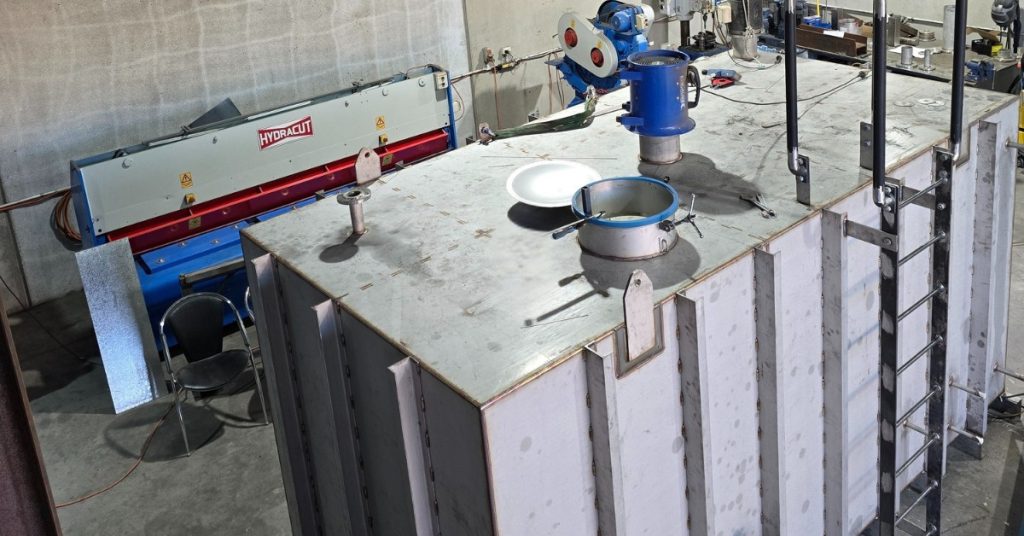
A stainless steel tank from a brewery company being repaired in Topweld shop

Common Causes of Stainless Steel Tank Degradation

Understanding why stainless steel tanks degrade helps determine whether repair remains viable or replacement is more appropriate.

1. Corrosion and Pitting

Although stainless steel is corrosion resistant, it is not corrosion-proof. Aggressive cleaning chemicals, chloride exposure, acidic products, and high-temperature washdown cycles can damage passive layers and initiate pitting. Over time, localised corrosion can reduce wall thickness and compromise structural safety, particularly in tanks exposed to harsh process environments.

2. Weld Fatigue and Micro-Cracking

Welded joints are natural stress concentrators. Repeated thermal expansion and contraction, pressure cycling, and vibration can cause fatigue cracking in weld zones. While small cracks may be repairable, progressive weld degradation often signals that the tank is approaching the end of its safe service life.

3. Mechanical Damage and Deformation

Forklift impact, foundation movement, or internal pressure fluctuations can distort tank geometry. Even minor deformation may affect drainage performance, cleaning effectiveness, and pressure ratings. Structural distortion is often a key indicator that replacement should be considered rather than ongoing repair.

4. Hygienic Surface Degradation

In food, beverage, and dairy processing, surface finish integrity is essential for cleanability and microbial control. Scratches, erosion, and chemical etching can create harbourage points for bacteria. Once surface degradation exceeds hygienic tolerances, repair options become limited and replacement may be the only compliant solution.

When Stainless Steel Tank Repair Is Technically Appropriate

There are scenarios where stainless steel tank repair remains a practical and responsible solution, particularly when the tank is structurally sound and compliant with current operational requirements.

1. Localised Surface Corrosion Without Structural Penetration

Where corrosion is confined to surface layers and has not compromised wall thickness, repair is often feasible. Surface restoration processes, including mechanical cleaning, passivation, and surface finishing, can restore corrosion resistance and hygienic performance. This approach is commonly viable for tanks used in food processing environments where chemical exposure is the primary degradation mechanism.

2. Isolated Weld Defects or Fatigue Cracking

Weld repairs can be undertaken where cracking is localised and the surrounding material remains within acceptable thickness tolerances. Properly executed repairs should be performed in accordance with applicable Australian welding standards and followed by inspection and testing. Where tanks form part of integrated systems, associated pipework and support structures may also require inspection. In these cases, coordination with Structural Fabrication & Welding is often relevant.

3. Failure of Nozzles, Fittings, or Ancillary Components

Failures involving manways, inlet and outlet nozzles, gaskets, or flanges are typically repairable without full tank replacement. These components experience wear due to frequent connection cycles and thermal expansion. Replacing fittings can extend tank service life where the vessel shell itself remains structurally sound.

4. Continued Compliance With Regulatory and Hygienic Standards

If inspection confirms that the tank continues to meet hygiene requirements, pressure ratings, and applicable Australian Standards, repair may be justified. In these situations, targeted maintenance work coordinated with Industrial Maintenance & Repairs can restore operational reliability without introducing unnecessary capital expenditure.
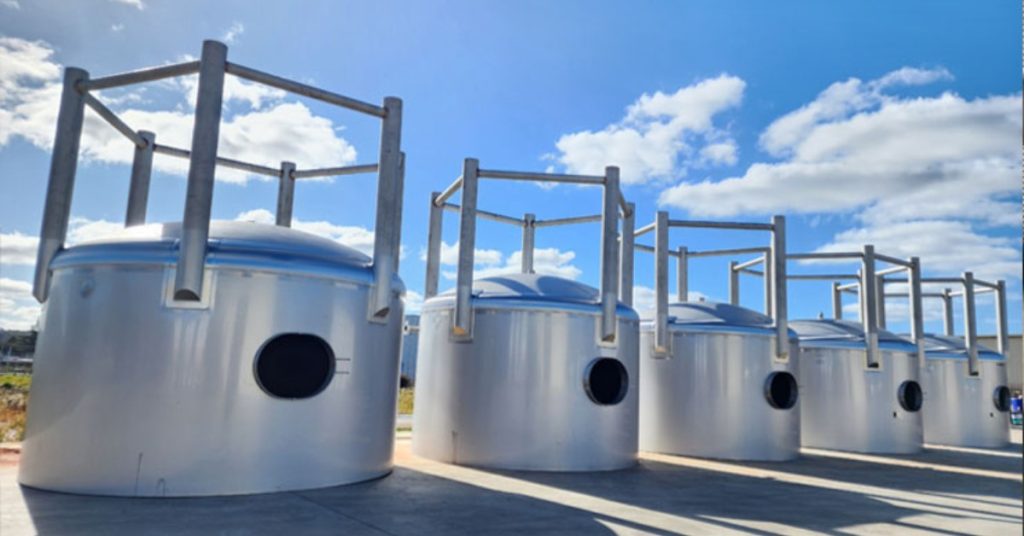
A custom-fabricated stainless steel tank to replace old tanks in a winery plant.

When Stainless Steel Tank Replacement Becomes the Safer Option

There are circumstances where replacement is not only more economical over the long term but also necessary from a safety and compliance perspective.

1. Structural Compromise and Loss of Wall Thickness

When corrosion penetrates deeply or wall thickness falls below design tolerances, the tank no longer meets structural safety requirements. Welding repairs in such cases may provide short-term remediation but cannot restore original structural integrity. Replacement becomes the only technically sound option to mitigate failure risk.

2. Escalating Maintenance and Repeated Repair Cycles

A pattern of frequent repairs is a strong indicator that a tank has reached the end of its economic service life. Ongoing maintenance costs, compounded by repeated downtime, often exceed the long-term cost of replacement. In these scenarios, a lifecycle cost analysis frequently supports replacement as the more rational decision.

3. Non-Compliance With Current Standards

Regulatory requirements evolve over time, particularly in hygienic design and pressure equipment compliance. Older tanks may not meet current food safety, pharmaceutical, or pressure vessel standards. Continued operation of non-compliant equipment exposes facilities to audit failure, insurance complications, and operational risk. Where tanks fall under pressure equipment classifications, compliance considerations may necessitate engagement with Pressure Vessel Fabrication & Welding services.

4. Process Modifications and Capacity Expansion

Changes in production processes, throughput requirements, or product lines often render existing tanks unsuitable. Requirements for larger volumes, improved thermal control, modified inlet and outlet configurations, or upgraded surface finishes can make retrofitting impractical. In such cases, replacement with purpose-built vessels manufactured through Stainless Steel Tank Fabrication enables alignment with current and future operational needs.

Cost, Risk, and Lifecycle Considerations

The financial comparison between stainless steel tank repair vs replacement should extend beyond immediate cost. Short-term repair expenditure may appear attractive, but long-term costs associated with repeated downtime, quality risk, and compliance exposure often outweigh the upfront capital cost of replacement.

Lifecycle assessment should account for remaining service life, frequency of maintenance interventions, energy efficiency, cleaning efficiency, and the risk profile associated with failure. From an asset management perspective, replacement may represent a more stable investment where tanks form part of critical production infrastructure.

Inspection and Assessment: Establishing the Technical Baseline

A structured inspection process is essential to inform the repair versus replacement decision. This assessment typically involves non-destructive testing to evaluate wall thickness, visual examination of weld integrity, and inspection of surface condition relative to hygienic requirements. Pressure testing may be required where tanks operate under pressurised conditions.

Inspection outcomes should be documented and benchmarked against original design specifications and current compliance standards. This technical baseline provides the foundation for rational decision-making and capital planning.

Industry-Specific Decision Factors

Food, Beverage, and Dairy Processing

In hygienic processing environments, surface integrity and cleanability are paramount. Even minor surface degradation can compromise compliance with food safety standards. Repair is appropriate where hygienic finish can be fully restored. Replacement becomes necessary where surface degradation introduces contamination risk.

Wineries and Breweries

Temperature control, fermentation performance, and cleanability are central to product quality. Older tanks may lack the thermal performance or configuration required for modern production processes. Replacement may support improved consistency and process control.

Chemical and Pharmaceutical Facilities

Material compatibility and corrosion resistance are critical. Tanks exposed to aggressive chemicals may experience accelerated degradation. Where corrosion mechanisms exceed the limits of repair, replacement with appropriately specified materials is often the only compliant option.

Local Engineering Support and Operational Continuity

Engaging regional fabrication and maintenance specialists supports faster response times and reduces logistical complexity. Facilities in Griffith and Leeton benefit from access to locally based inspection and fabrication services capable of providing both repair and replacement options, including associated Tube & Pipe Fabrication & Installation where tank upgrades affect process connections.

Practical Framework for Decision-Making

The decision between stainless steel tank repair vs replacement should be guided by four core questions. Does the tank remain structurally sound within design tolerances? Does it comply with current regulatory and hygiene standards? Is the projected lifecycle cost of repair justified relative to replacement? Does the existing tank configuration align with current and future process requirements?

When these questions are assessed objectively, the appropriate course of action becomes clearer. Repair is appropriate where safety, compliance, and performance can be reliably restored. Replacement is warranted where risk, non-compliance, or escalating maintenance undermine operational reliability.

Where Topweld Fits in the Process

At the final stage of this decision-making process, facilities benefit from independent technical assessment and engineering-led recommendations. TOPWELD General Engineering Pty Ltd supports industrial operators across Griffith, Leeton, and the Riverina with inspection, repair, and custom fabrication services. The role of an experienced fabrication partner is to provide objective technical input to ensure that decisions around repair or replacement are based on safety, compliance, and long-term operational value rather than short-term expediency.
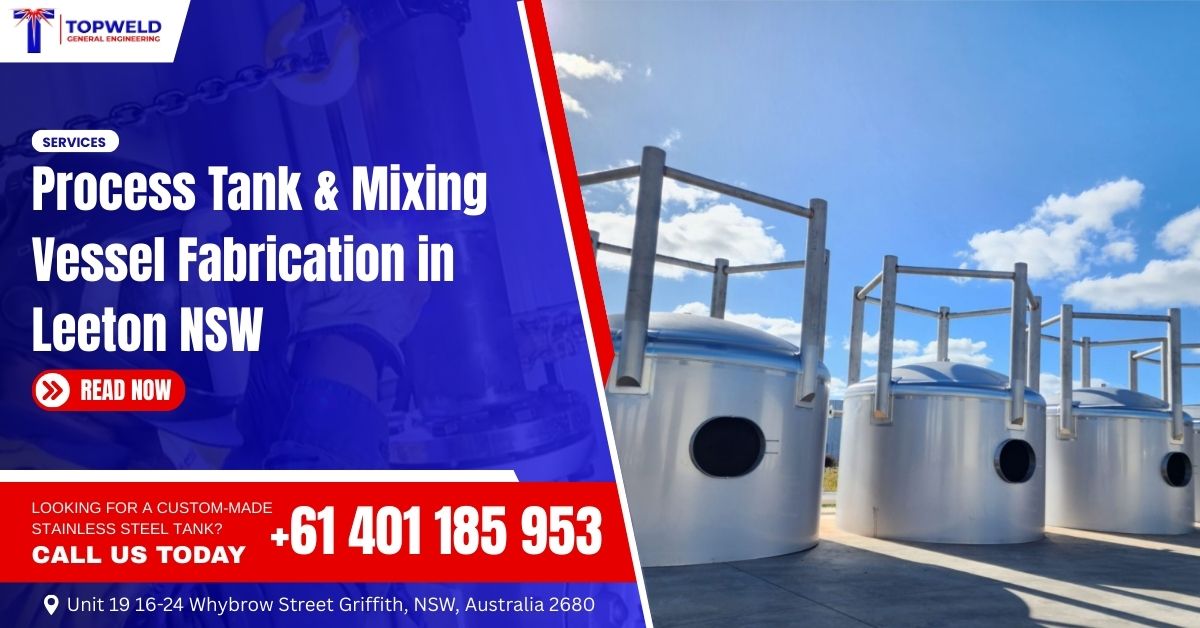
Process Tank & Mixing Vessel Fabrication in Leeton NSW

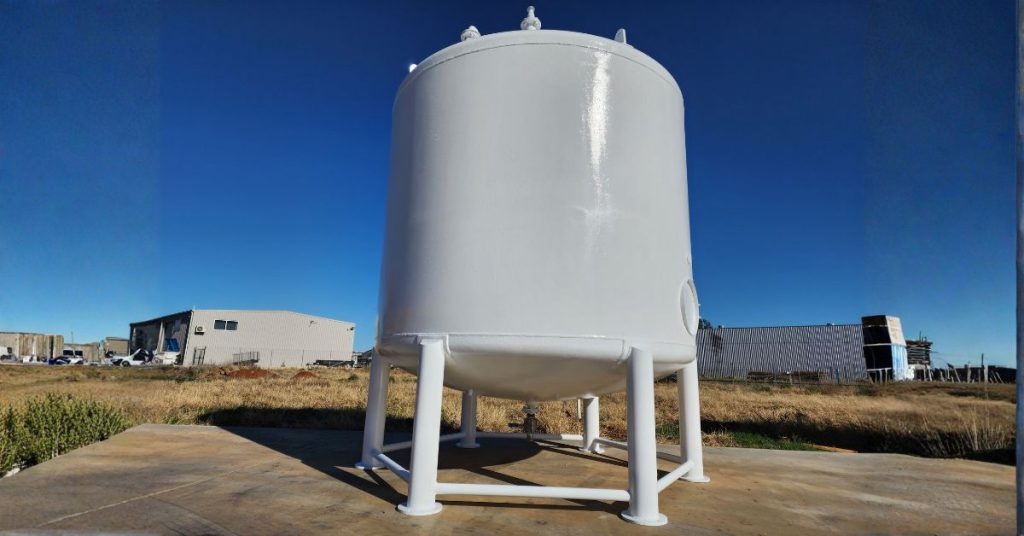
Stainless steel process tank fabricated by topweld expert fabricators for dairy processing company

Precision-Engineered Solutions for Industrial Processing Environments

Process tank & mixing vessel fabrication in Leeton NSW plays a vital role in supporting the Riverina’s food, agricultural, and industrial sectors. From dairy processing and wineries to manufacturing and chemical handling, businesses rely on well-designed tanks and vessels to control mixing, heating, cooling, and storage processes with consistency and safety.


These vessels do more than hold product. They directly influence product quality, hygiene outcomes, energy efficiency, and production reliability. For this reason, process tanks and mixing vessels demand a level of engineering and stainless steel fabrication precision that goes well beyond general metalwork.

In Leeton and surrounding Riverina towns, where production schedules often run continuously or seasonally, businesses depend on fabrication solutions that deliver durability, compliance, and long-term performance.

Understanding Process Tanks and Mixing Vessels in Industrial Operations

Process tanks and mixing vessels are engineered containers designed to support specific industrial processes. They may store raw materials, blend ingredients, maintain temperature, or support chemical reactions. Each vessel must suit the product it handles, the operating environment, and the production workflow.

Process tank & mixing vessel fabrication in Leeton NSW commonly supports industries such as:


    • Food and beverage processing

    • Dairy production and milk handling

    • Wineries and breweries

    • Agricultural processing

    • Pharmaceutical and chemical manufacturing

    • General industrial production

Unlike standard storage tanks, process and mixing vessels often include internal components such as agitators, baffles, heating jackets, or spray systems. These features demand careful design integration during fabrication to ensure efficiency, hygiene, and structural integrity.

Why Process Tank & Mixing Vessel Fabrication Requires Specialist Engineering

Process tank & mixing vessel fabrication in Leeton NSW requires a detailed understanding of mechanical design, material behavior, and production requirements. Fabricators must consider how product flows through the vessel, how it mixes, and how the vessel responds to temperature and pressure changes.

Fabrication teams must address several critical factors, including:


    • Structural loads during mixing and agitation

    • Thermal expansion during heating or cooling cycles

    • Hygienic design requirements for food and dairy applications

    • Chemical compatibility with vessel materials

    • Long-term fatigue and corrosion resistance

Poorly designed or fabricated vessels can lead to inconsistent mixing, product contamination, excessive wear, or costly downtime. For processing facilities operating under strict quality and safety controls, these risks are unacceptable.

Process Tank & Mixing Vessel Fabrication in Leeton NSW for Food and Dairy Processing

Food and dairy processing facilities across Leeton and the wider Riverina region rely heavily on hygienic process tanks and mixing vessels. These environments demand smooth internal surfaces, clean welds, and designs that prevent bacterial growth and product contamination.


Process tank & mixing vessel fabrication in Leeton NSW for food and dairy applications must align with hygienic design principles. Fabricators must eliminate crevices, ensure full weld penetration, and achieve consistent surface finishes that support effective cleaning and sanitation.


In dairy processing, for example, mixing vessels may handle milk, cream, or cultured products under controlled temperature conditions. Any defect in fabrication can compromise product quality or shelf life, reinforcing the importance of precision workmanship.

The Role of Stainless Steel in Process Tank Fabrication

Stainless steel remains the most widely used material for stainless steel process tank and mixing vessel fabrication, particularly in food, beverage, and pharmaceutical environments. Its corrosion resistance, strength, and cleanability make it ideal for hygienic processing systems.


Process tank & mixing vessel fabrication in Leeton NSW often uses stainless steel grades selected to suit the application, operating temperature, and cleaning regime. Fabricators must manage heat input carefully during welding to preserve corrosion resistance and prevent distortion.


Proper stainless steel fabrication also supports long-term performance by reducing maintenance requirements and extending service life, especially in high-use processing environments.

Mild Steel Tank fabricated by topweld fabricators for a meat processing company in Leeton NSW

Carbon Steel and Specialty Materials for Industrial Applications

While stainless steel dominates hygienic processing, carbon steel and specialty alloys remain important in many industrial applications. These materials may suit vessels used for non-food products, chemical processing, or high-strength requirements.


Process tank & mixing vessel fabrication in Leeton NSW involving carbon steel demands strict control of welding procedures to prevent cracking, distortion, or premature failure. Material selection must align with the product handled, operating conditions, and environmental exposure.


Experienced fabricators assess these factors early in the design stage to ensure the vessel performs reliably throughout its intended lifespan.

Design Considerations in Process Tank & Mixing Vessel Fabrication

Effective vessel fabrication begins with sound design. Process tank & mixing vessel fabrication in Leeton NSW requires close attention to how the vessel integrates into the broader production system.

Key design considerations include:


    • Vessel capacity and geometry

    • Mixing efficiency and flow patterns

    • Integration of agitators, inlets, and outlets

    • Access for cleaning, inspection, and maintenance

    • Compatibility with existing pipework and systems

A well-designed vessel improves process efficiency, reduces energy consumption, and supports consistent product outcomes. Fabricators must balance functional requirements with fabrication practicality and compliance obligations.

Welding Quality and Its Impact on Vessel Performance

Welding quality directly influences the performance and reliability of process tanks and mixing vessels. Inconsistent welds can create weak points, disrupt product flow, or compromise hygiene standards.

Process tank & mixing vessel fabrication in Leeton NSW requires controlled welding procedures that deliver:


    • Full weld penetration

    • Smooth internal profiles

    • Minimal distortion

    • Consistent strength across joints

Fabricators must select welding techniques that suit the vessel material, thickness, and design complexity. Skilled welders play a crucial role in ensuring that vessels perform as intended once installed.

Inspection and Quality Assurance in Vessel Fabrication

Inspection and quality assurance form an essential part of process tank & mixing vessel fabrication in Leeton NSW. Fabricators must verify that vessels meet design specifications, material requirements, and applicable standards.


Quality assurance activities often include:


    • Visual inspection of welds and surfaces

    • Dimensional checks against design drawings

    • Verification of material grades

    • Review of fabrication and welding records

For hygienic or regulated industries, documentation provides confidence that vessels meet safety and quality expectations and can support audit requirements.

Process Tank & Mixing Vessel Fabrication for Wineries and Breweries

Leeton and the broader Riverina region support a growing wine and beverage sector. Process tanks and mixing vessels play a central role in fermentation, blending, and product handling.


Process tank & mixing vessel fabrication in Leeton NSW for wineries and breweries focuses on temperature control, cleanliness, and gentle handling of product. Vessel design must support consistent fermentation conditions while allowing for effective cleaning between batches.


Fabrication quality directly affects flavor consistency, product stability, and production efficiency, making vessel integrity a critical consideration for producers.

Repair and Modification of Existing Process Tanks and Vessels

Not all process tanks require replacement when operational needs change. In many cases, fabricators can modify or repair existing vessels to suit updated production requirements.


Process tank & mixing vessel fabrication in Leeton NSW often includes:


    • Capacity modifications

    • Addition or relocation of nozzles

    • Structural reinforcement

    • Repair of worn or damaged sections

Such work requires careful assessment to ensure the vessel remains structurally sound and fit for service. Skilled fabrication extends asset life and reduces capital expenditure for processing facilities.

Regional Considerations for Fabrication in Leeton NSW

Leeton’s industrial environment presents unique challenges. Seasonal production peaks, continuous processing, and exposure to cleaning chemicals place ongoing demands on equipment reliability.


Process tank & mixing vessel fabrication in Leeton NSW benefits from local expertise that understands these operational realities. Fabricators familiar with regional industries can deliver practical solutions that align with production schedules and compliance expectations.


Local capability also supports better communication, site-specific assessments, and responsive service throughout the fabrication lifecycle.

The Importance of Fabrication Precision in Processing Efficiency

Precision fabrication directly influences processing efficiency. Poorly fabricated vessels can create dead zones, uneven mixing, or temperature inconsistencies that affect product quality.


Process tank & mixing vessel fabrication in Leeton NSW must prioritise accuracy at every stage, from layout and cutting to welding and finishing. Precision workmanship supports consistent process outcomes, reduces waste, and improves overall system performance.


For processing facilities, these benefits translate into higher yields, improved product consistency, and lower operating costs.

A Structured Approach to Process Tank & Mixing Vessel Fabrication

Successful vessel fabrication follows a structured and methodical approach. Fabricators must coordinate design, material selection, welding, and inspection to deliver reliable outcomes.


Process tank & mixing vessel fabrication in Leeton NSW typically progresses through:


    • Design review and engineering assessment

    • Material preparation and cutting

    • Controlled welding and assembly

    • Inspection and quality verification

    • Final finishing and preparation for installation

This disciplined process ensures vessels meet performance expectations and integrate seamlessly into existing systems.

Process Tank & Mixing Vessel Fabrication Solutions at TOPWELD General Engineering

At the conclusion of any processing project, vessel quality determines long-term reliability. TOPWELD GENERAL ENGINEERING PTY LTD, serving Leeton NSW and the wider Riverina region, provides process tank and mixing vessel fabrication aligned with Australian industry standards and best practices.


With experience across stainless steel fabrication, hygienic welding, and industrial vessel construction, Topweld supports food, dairy, beverage, and manufacturing facilities with solutions focused on durability, safety, and operational efficiency.

Services

Topweld Services

n

We guarantee the highest quality workmanship in the industry, established in 20 years of experience

n n Talk To A Welding Expertn n n

Metal Fabrication and Welding

n n

Stainless Steel Fabrication

n n

Aluminium Fabrication

n n

Structural Fabrication

n n

Pipe and tube welding

n n

Design, Installation, Repairs and modifications

n n

Beekeeping Equipment

n n

Stainless Steel Storage Tank

n n

Pressure Vessel Welding

n n

Custom Stainless Steel Equipment

n n

Sanitary Welding

n n

Food Grade Welding

n Previousn Nextn

DREAM IT, WE CANnBUILD IT

n

We strive to consistently exceed our customers expectations
and creative innovative solutions to fit any need.

Keeping up with new trends and market demands while embodiying the quality craftsmanship and exemplary customer service.

n

Featured Welding and Fabrication Projects

n

SEARCHING FOR A TRUSTWORTHY AND COST-EFFECTIVE PROJECT SOLUTION?

n n contact usn