
Types of Metals Used by Welding and Fabrication Shops

Article about types of metals used by welding and fabrication shops

The success of any welding and fabrication project depends heavily on the material chosen. Each metal has unique properties that affect how it is cut, welded, formed, and finished. Selecting the right material ensures durability, compliance with industry requirements, and suitability for the end-use environment.

In this article, we examine the types of metals used by welding and fabrication shops, their characteristics, and the industries where they are most commonly applied.

1 Stainless Steel

Stainless steel is one of the most popular materials in fabrication thanks to its corrosion resistance, strength, and hygienic properties. It is often used in industries where sanitation and durability are essential, such as:

    • Food and beverage processing equipment
    • Abattoir and meat processing facilities
    • Pharmaceutical and medical equipment
    • Water treatment systems

Stainless steel comes in different grades, each offering varying levels of corrosion resistance, formability, and heat tolerance. Its smooth surface also makes it easy to clean, making it ideal for applications with strict hygiene requirements.

2. Carbon Steel

Carbon steel is valued for its strength, affordability, and versatility. It is widely used in:

    • Structural frameworks for buildings and infrastructure
    • Industrial machinery and equipment
    • Pressure vessels and tanks
    • Heavy-duty pipelines

Depending on the carbon content, it can range from soft and malleable (low carbon steel) to extremely hard and wear-resistant (high carbon steel). While it is less resistant to corrosion than stainless steel, protective coatings or paint can extend its service life.

3. Aluminium

Aluminium is prized for being lightweight, corrosion-resistant, and easy to work with. Common uses include:

    • Aerospace and automotive components
    • Marine and coastal structures
    • Lightweight industrial frameworks
    • Storage tanks and transport equipment

Aluminium’s natural oxide layer protects it from corrosion, and it is also recyclable, making it an environmentally friendly choice. Its lightweight properties reduce load in structural applications, offering energy and cost savings.

4. Galvanised Steel

Galvanised steel is carbon steel coated with a protective layer of zinc to resist corrosion. This makes it suitable for outdoor and exposed environments, including:

    • Agricultural equipment and structures
    • Roofing, fencing, and outdoor frameworks
    • Utility poles and piping

The zinc coating protects the underlying steel from rust, making galvanised steel a cost-effective alternative for projects where stainless steel may not be required.

5. Copper

Copper is less common in general fabrication but plays an important role in specialised applications. It is highly conductive and resistant to corrosion, which makes it ideal for:

    • Electrical components and wiring
    • Plumbing and water systems
    • Decorative architectural features

Its natural antibacterial properties also make it suitable for hygiene-sensitive applications, although cost can be a limiting factor.

6. Brass

Brass, an alloy of copper and zinc, is known for its aesthetic appeal, corrosion resistance, and machinability. It is frequently used in:

    • Decorative fittings and fixtures
    • Valves and plumbing components
    • Musical instruments

Brass offers both functionality and a polished finish, making it suitable for industries that require durability with a premium look.

6. Specialty Alloys

In addition to the common metals listed above, fabrication shops also work with speciality alloys designed for extreme environments. These alloys provide enhanced resistance to heat, chemicals, or wear, and are often specified in industries such as mining, defence, and energy.

Understanding the types of metals used by welding and fabrication shops helps clients make informed decisions about their projects. From stainless steel’s hygiene and durability to aluminium’s lightweight versatility, each material offers unique advantages that align with different applications and industries.

At Topweld General Engineering, we work with a wide variety of metals to deliver tailored solutions that meet both performance requirements and compliance standards. Whether you need stainless steel tanks, carbon steel structures, or aluminium frameworks, our team has the expertise to select the right material and fabricate it to precision.
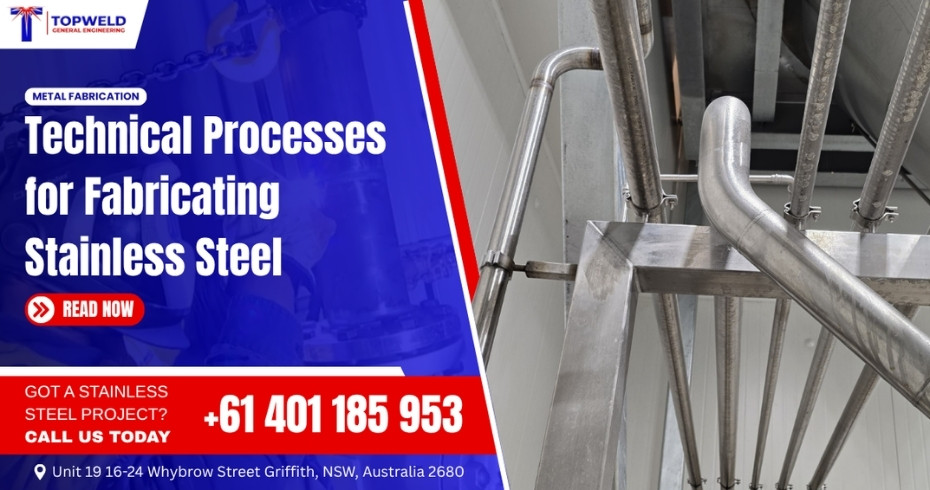
Technical Processes for Fabricating Stainless Steel

Stainless steel is one of the most versatile and widely used materials in modern fabrication. Its durability, corrosion resistance, and hygienic properties make it essential in industries such as food and beverage, pharmaceuticals, energy, construction, and manufacturing. However, achieving precise results with stainless steel requires a series of technical processes that demand skill, accuracy, and adherence to industry regulations.

In this article, we explore the key technical processes for fabricating stainless steel, highlighting each stage and its importance in ensuring a high-quality finished product.

1. Cutting and Preparation

The fabrication process begins with cutting stainless steel sheets, plates, or bars into the required sizes and shapes. Several cutting methods are commonly used:

  • Laser cutting for precision and clean edges.
  • Plasma cutting for thicker materials and faster production.
  • Water jet cutting for high accuracy without generating heat that could alter material properties.
  • Mechanical cutting such as sawing or shearing for straightforward applications.

Proper preparation is equally important — edges must be cleaned and smoothed to prevent contamination or defects in later stages. This preparation ensures efficiency in welding, forming, and assembly.

2. Forming and Shaping

Once the stainless steel is cut, it must be shaped into the required configuration. This involves several processes, including:

  • Press braking to bend stainless steel sheets into angles and channels.
  • Rolling to produce cylindrical components like pipes, tanks, and vessels.
  • Stamping and punching for producing complex parts with holes or embossing.
  • Forging for shaping under high pressure, improving strength and grain structure.

These forming techniques allow fabricators to achieve precise geometries while preserving stainless steel’s strength and finish.

3. Machining and Drilling

For components that require exact dimensions or intricate details, machining is essential. Using CNC (Computer Numerical Control) machines, fabricators can achieve tight tolerances and repeatability. Common machining processes include:

  • Turning to produce cylindrical shapes.
  • Milling for slots, grooves, and flat surfaces.
  • Drilling for precision holes.
  • Grinding to achieve smooth surfaces and accurate dimensions.

Machining stainless steel requires specialized tooling to handle the material’s toughness and reduce wear on cutting tools.

4. Welding Stainless Steel

Welding is one of the most critical technical processes in stainless steel fabrication. Skilled welders use a variety of techniques depending on the application, such as:

  • TIG welding (Gas Tungsten Arc Welding) for high precision and clean welds, especially in food-grade or sanitary applications.
  • MIG welding (Gas Metal Arc Welding) for efficiency in larger projects.
  • Stick welding (Shielded Metal Arc Welding) for heavy-duty or structural applications.

The key challenge in welding stainless steel is preventing warping and maintaining corrosion resistance. Proper heat control, shielding gases, and post-weld cleaning are vital to preserving the integrity of the material.

5. Surface Finishing

Stainless steel often requires surface finishing to enhance both performance and appearance. Common finishes include:

  • Polishing and brushing for aesthetic appeal and ease of cleaning.
  • Passivation to restore the chromium oxide layer, improving corrosion resistance.
  • Powder coating or painting when additional protective or decorative layers are required.

Finishing not only improves the look of stainless steel products but also increases their longevity in harsh environments.

6. Inspection and Quality Control

Every stainless steel fabrication project must undergo rigorous inspection and quality control. This involves:

  • Dimensional checks to ensure accuracy and compliance with specifications.
  • Weld inspections for defects such as cracks, porosity, or lack of fusion.
  • Surface examinations to confirm cleanliness and finish quality.
  • Load or pressure testing when required, particularly for tanks, vessels, or structural components.

Adhering to industry regulations and Australian compliance requirements ensures that all fabricated products are safe, reliable, and fit for purpose.

Conclusion

The technical processes for fabricating stainless steel involve much more than simply cutting and welding. From preparation and forming through to machining, welding, finishing, and inspection, each stage requires expertise, advanced equipment, and strict compliance with safety and quality standards.

At Topweld General Engineering, we combine skill, precision, and industry knowledge to deliver stainless steel fabrication projects that meet the highest benchmarks. Whether you need custom tanks, structural frameworks, or industrial components, our team is ready to provide solutions that are durable, hygienic, and built to last.

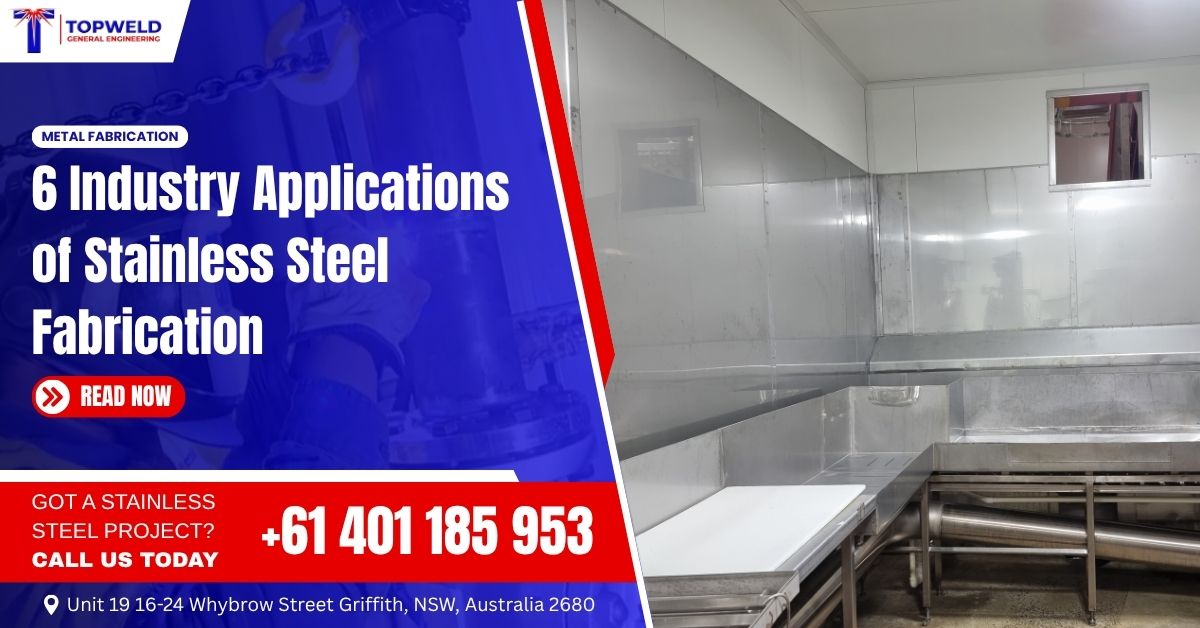
6 Industry Applications of Stainless Steel Fabrication

When it comes to custom fabrication, the strength and safety of the finished product depend not just on skilled workmanship but also on systematic oversight. A quality control (QC) system ensures that every stage of the fabrication process — from material selection to final inspection — meets strict performance, compliance, and safety requirements. Without QC in place, projects risk delays, rework, and costly failures.

In this article, we outline the key reasons why businesses should hire metal fabricators with a quality control system, and what benefits this delivers to projects across various industries.

1. Food and Beverages

The food and beverage industry demands materials that prioritise hygiene, efficiency, and durability. Stainless steel is widely used because it offers:

    • Corrosion resistance, making it ideal for equipment exposed to moisture, acids, and cleaning chemicals.
    • Non-porous surfaces that prevent bacterial growth and are easy to clean.
    • Long-lasting tanks, conveyors, and pipelines that maintain food integrity.

From packaging systems to processing lines, stainless steel ensures that businesses maintain both productivity and safety. It also supports compliance with food safety regulations, allowing manufacturers to consistently deliver high-quality products. Additionally, its long service life reduces replacement costs, making it a sustainable and economical choice for food and beverage facilities.

2. Pharmaceutical and Medical Industry

In pharmaceuticals and healthcare, product purity and patient safety are non-negotiable. Stainless steel fabrication supports these needs by providing:

    • Sterile tanks and vessels for medicine production.
    • Surgical instruments and medical devices that withstand frequent sterilisation.
    • Cleanroom furniture and components designed for contamination-free environments.

Its non-reactive and hygienic properties make stainless steel the material of choice for an industry that operates under strict compliance requirements. Fabricated equipment is designed to withstand repeated cleaning and sterilisation without degrading, ensuring reliability in critical applications. This durability, combined with its resistance to chemical reactions, gives stainless steel a unique advantage in both pharmaceutical manufacturing and healthcare environments.

3. Energy and Power Generation

Energy production requires equipment that can handle extreme pressures, high temperatures, and corrosive environments. Stainless steel fabrication is applied in:

    • Boilers, heat exchangers, and turbines.
    • Pipelines and storage tanks for oil, gas, and renewables.
    • Structural components in power plants.

By using stainless steel, the energy sector ensures safety, reliability, and long-term performance under challenging conditions. Its ability to perform consistently in environments with high mechanical stress or exposure to harsh chemicals makes it indispensable. Whether in fossil fuel plants or renewable energy projects, stainless steel provides the resilience needed to keep power generation systems operating efficiently.

4. Wineries and Breweries

For wineries and breweries, stainless steel is integral to both production quality and operational hygiene. Fabricated stainless steel equipment provides:

    • Fermentation tanks and brewing vessels that prevent contamination.
    • Storage tanks that preserve taste and quality.
    • Durable piping and fittings designed for ease of cleaning.

The use of stainless steel ensures compliance with sanitation standards while maintaining the flavour and integrity of beverages. Its neutral composition prevents any unwanted reactions with wines, beers, or spirits, helping producers maintain consistency in every batch. Furthermore, stainless steel equipment is durable enough to withstand the long fermentation processes required in winemaking and brewing, offering producers a reliable investment.

5. Dairy Industry

The dairy sector requires equipment that can process milk and dairy products safely, without compromising hygiene or efficiency. Stainless steel fabrication provides:

    • Pasteurisation and processing tanks resistant to acids and cleaning agents.
    • Pipelines and fittings designed to prevent bacterial build-up.
    • Equipment with smooth, non-porous finishes that maintain product purity.

Stainless steel helps dairy producers meet strict quality and safety standards while extending the lifespan of equipment. Its resistance to corrosion from lactic acids ensures that dairy plants can operate without contamination risks. Moreover, stainless steel’s smooth surfaces simplify cleaning, reducing downtime and improving production efficiency. This combination of hygiene, durability, and performance makes it a cornerstone of modern dairy processing.

6. Abattoir and Meat Processing Industry

Abattoirs and meat processing plants face unique challenges in maintaining hygiene and operational efficiency. Stainless steel fabrication offers solutions such as:

    • Processing tables, conveyors, and equipment designed for easy cleaning and durability.
    • Custom-built tanks and storage solutions that ensure safety and efficiency.
    • Corrosion-resistant surfaces that withstand constant exposure to water, blood, and cleaning agents.

This makes stainless steel indispensable in helping the meat processing industry meet regulatory and food safety requirements. Equipment fabricated from stainless steel can endure the rigorous cleaning processes necessary in abattoirs without deteriorating. In addition, its durability supports high-volume production while maintaining strict hygiene, giving meat processors confidence in both performance and compliance.

These six industry applications of stainless steel fabrication highlight its versatility and importance across diverse sectors. Whether it’s ensuring hygiene in food and dairy processing, purity in pharmaceuticals, safety in energy generation, or compliance in abattoirs, stainless steel consistently delivers long-term value.

At Topweld General Engineering, we provide tailored stainless steel fabrication services that meet the specific needs of industries such as food and beverages, healthcare, energy, wineries, dairies, and abattoirs. Our expertise ensures every project meets quality, safety, and performance standards.