Aluminium vs Stainless Steel: Choose the right metal for your fabrication project

topweld aluminum

Aluminium vs Stainless Steel: Choose the Right metal for your fabrication project

At Topweld General Engineering, we know that choosing the right material is crucial to the success of any fabrication project. Two metals that are often used for their remarkable properties are stainless steel and aluminium. Both are versatile, strong, and resistant to corrosion, and both are standard offerings across many industries, ranging from construction and manufacturing to energy and even household stuff. 

Whereas a general glance may indicate similarity with their usual silver-gray color, the inherent characteristics of aluminium and stainless steel are quite different. Hence, in initiating a fabrication project, gaining in depth knowledge of what each metal has to offer is imperative in making an effective choice. let’s proceed into the major considerations while comparing these two workhorses of the world of metal fabrication. 

Understanding the Basics: Aluminum

Naturally occurring metallic element aluminium is very prevalent in the environment. Purer aluminium, a non-ferrous metal that is soft and very malleable, is obtained mainly from the ore bauxite. It’s usually alloyed with silicon, zinc, magnesium, copper, or manganese to release its potential for many uses. It gets stronger and other desired properties necessary for fabrication through this alloying. One of the most impressive characteristics of aluminium is its high malleability, making it possible for our experienced fabricators and designers to produce detailed and complex shapes.

Learning the fundamentals: Stainless Steel

Stainless steels are a heterogeneous group of steel alloy known for their corrosion resistance. This describe feature is developed by incorporating at least 10.5% chromium in iron, combined with a trace amount of carbon. As steel itself is an alloy of carbon and iron, the addition of chromium is what distinguishes stainless steel, offering its eponymous resistance to corrosion and rust. Beyond this intrinsic protection, the mechanical properties of stainless steel may be further customized by adding other elements like nickel, silicon, molybdenum, titanium, niobium, and manganese. The exact combination of these factors in any given grade of stainless steel is determined by the performance needs of its application, whether improved corrosion resistance, survivability under severe temperatures, greater strength, better weldability, or enhance formability. 
Major factors to Consider

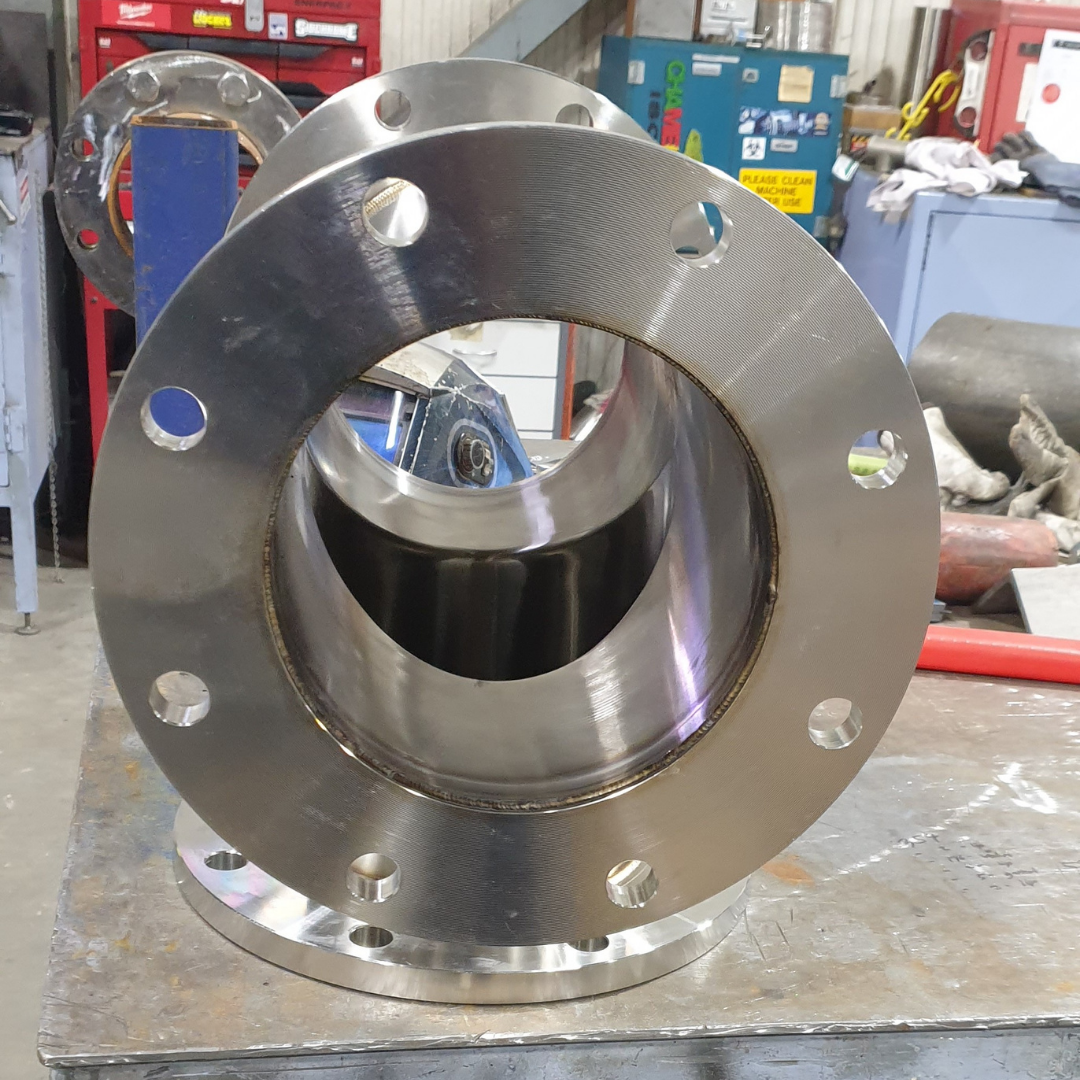
The technical processes for fabricating stainless steel involve much more than simply cutting and welding. From preparation and forming through to machining, welding, finishing, and inspection, each stage requires expertise, advanced equipment, and strict compliance with safety and quality standards.

At Topweld General Engineering, we combine skill, precision, and industry knowledge to deliver stainless steel fabrication projects that meet the highest benchmarks. Whether you need custom tanks, structural frameworks, or industrial components, our team is ready to provide solutions that are durable, hygienic, and built to last.

Strength

Aluminum is a better conductor of electricity and heat than stainless steel. If conductivity becomes an essential consideration for your project, aluminum is usually the preferable option. With high electrical conductivity and corrosion resistance, along with light weight, it is well suited for power transmission lines. Being a thermal conductor, aluminum finds numerous applications in heat sinks for products that need instant cooling, including radiators, LED light fixtures, electronics, and air conditioning units.

Electrical and Thermal Conductivity

Stainless steel tends to be denser, heavier, and have higher inherent strength than aluminium. That being said, aluminium excels when it comes to strength-to-weight ratio. In spite of weighing around one-third that of steel, aluminium can provide similar or even greater strength-to-mass. This property makes it very valuable in such fields as automotive and aviation, where weight savings equate to better fuel efficiency and greater payload. On the other hand, sheer load-bearing capacity from stainless steel very frequently makes it the material of choice for structural members and architectural elements in cases where absolute load-carry capacity is the priority.

Thermal Characteristics

Stainless steel offers superior high-temperature resistance. Whereas aluminum may start to weaken and soften at temperatures in excess of 200°C (about 392°F), stainless steel can consistently operate at temperatures well over 400°C (about 752°F). Because of this, stainless steel is the material of choice for applications involving high heat.

WEldability

Should welding be a part of your fabrication process, stainless steel tends to be easier to work with than aluminum. Aluminum’s thermal conductivity and comparative lower melting point make it harder to weld efficiently. Problems such as hot cracking during cooling are also a well-known issue with aluminum. Stainless steel, on the other hand, has a tensile strength frequently two to three times that of aluminum, and well-done welds can be as strong or even stronger than the materials being welded together.

Cost

The prices of aluminum and steel in the market fluctuate with respect to several economic factors such as supply and demand, fuel, and availability of raw materials such as iron and bauxite ore. The higher cost of raw materials for aluminum manufacturing tends to reflect in a higher price, often in the range of 20-30% or more than stainless steel. But it’s also important to keep in mind that aluminum’s strength-to-weight ratio could also translate to less material required in order to obtain the level of structural integrity desired, possibly counteracting part of the cost difference up front.

Indivudual industries

While aluminum foil may have a less than stellar reputation in food applications, food-grade aluminum items certainly exist and are safe for use in kitchens. But the more porous texture of aluminum and the fact that it scratches or dents more easily can complicate cleaning. Culinary professionals and food service operations commonly prefer stainless steel because of its superior strength and durability. Its non-porous finish is perfectly suited to uses needing strict sanitary conditions, such as knives, cookware, and kitchen equipment, since it repels the intrusion of germs and bacteria.

Choose the Right material for your project

Choosing between aluminum and stainless steel for your fabrication work is an important consideration. At Topweld General Engineering, we make it our mission to equip our clients with the information necessary to make the most suitable material choice for their particular application. Ultimately, the best choice between aluminum and stainless steel depends solely on the intended properties necessary to achieve the success and lifespan of your product. We invite you to consult with our seasoned fabricators about the particular requirements of your application.

Ready to discuss your next fabrication project? Contact Topweld General Engineering today to determine the best material for your specific application!

Is Metal Fabrication a Good Career? Exploring Opportunities

pressure vessel two people welding

When considering a career, finding a path that offers stability, growth potential, and personal satisfaction is key. Metal fabrication, a cornerstone of industries ranging from construction to aerospace, offers all of this and more. But is metal fabrication a good career choice for you? Let’s dive into what the industry entails, its benefits, and why it could be a fulfilling profession.

What is Metal Fabrication?

Metal fabrication is the process of cutting, shaping, and assembling metal structures. It’s a skilled trade that combines technical expertise with hands-on craftsmanship. Fabricators work with materials like steel, aluminum, and copper, transforming them into everything from architectural frameworks to machinery components.

Why Consider a Career in Metal Fabrication?


    1. High Demand for Skilled Workers Metal fabrication is crucial to a wide range of industries, including construction, automotive, manufacturing, and energy. As industries evolve and infrastructure grows, the need for skilled fabricators remains strong. This creates a consistent demand for workers, leading to job stability and long-term career prospects.

    1. Diverse Career Opportunities Metal fabrication encompasses a broad spectrum of skills, from welding and machining to assembly and design. As a fabricator, you can specialise in areas like CNC machining, custom metalwork, or structural fabrication. This diversity allows you to find your niche and advance your career in different directions, depending on your interests and strengths.

    1. Hands-On and Creative Work If you enjoy working with your hands and seeing tangible results from your efforts, metal fabrication is a great fit. The trade combines problem-solving with creativity, as fabricators often need to design custom solutions to meet specific client needs. Every project presents a unique challenge, making the work engaging and fulfilling.

    1. Competitive Salary and Benefits Metal fabricators often enjoy competitive wages, especially as they gain experience and expertise. As industries like construction and manufacturing continue to grow, the compensation for skilled fabricators is expected to rise. In addition to good pay, many fabrication jobs offer benefits such as health insurance, retirement plans, and job security.

    1. Advancement and Growth Potential With the right training and experience, metal fabrication offers significant opportunities for career growth. Fabricators can advance to supervisory roles, become certified welders, or specialise in highly technical areas like robotic welding or CNC programming. Additionally, experienced fabricators may choose to open their own shops or consult for large companies, offering even greater earning potential and independence.

welding services career

Challenges in Metal Fabrication

Like any career, metal fabrication comes with its own set of challenges. The work can be physically demanding, requiring strength and stamina. Fabricators often work in industrial environments, which can involve loud noises and exposure to various safety hazards. However, with proper training and safety precautions, these challenges can be effectively managed.

How to Get Started in Metal Fabrication

To begin a career in metal fabrication, you typically need a high school diploma or equivalent. Vocational schools, community colleges, and apprenticeship programs offer courses in welding, machining, and fabrication techniques. On-the-job training is also common, allowing you to learn while you earn. Certifications in welding, such as those offered by the American Welding Society (AWS), can enhance your employability and earning potential.

Conclusion: A Rewarding Career Path

In summary, metal fabrication is a rewarding career for those who enjoy hands-on work, solving complex problems, and creating lasting products. With growing demand, competitive salaries, and opportunities for advancement, the industry offers a bright future for skilled fabricators. If you’re looking for a career with stability, creativity, and room for growth, metal fabrication could be the perfect choice.

Understanding Stainless Steel Welding Without Purging

structural-steel-fabrication

Stainless steel welding is a critical process in various industries, including food processing, pharmaceuticals, and chemical manufacturing, due to its corrosion resistance, durability, and aesthetic appeal. However, welding stainless steel presents unique challenges, particularly when it comes to maintaining the metal’s integrity and preventing oxidation. One of the conventional methods to protect the weld area from oxidation is purging with an inert gas, such as argon. But what happens when purging isn’t an option? Can you still achieve a quality weld on stainless steel without purging? The answer is yes, and in this blog, we’ll explore the methods and considerations for welding stainless steel without purging.

Before diving into alternative techniques, it’s essential to understand why purging is commonly used. Purging involves displacing the air in the weld area with an inert gas, preventing oxygen and nitrogen from reacting with the molten metal. This reaction can cause discoloration, weakened welds, and corrosion susceptibility. In stainless steel welding, maintaining a clean and controlled environment is crucial to preserving the metal’s properties and ensuring a strong, durable weld.

When purging isn’t feasible, several techniques can be employed to minimize the risks associated with welding stainless steel:

  1. Use of Backing Tape or Backing Bars:
    • Backing tapes are specialized materials applied to the backside of the weld to protect it from oxidation. These tapes typically consist of a layer of adhesive and a metallic backing strip, providing a barrier against atmospheric gases. Backing bars, often made of copper, can also be used to support the weld and prevent oxygen exposure.
  2. Controlled Heat Input:
    • Managing heat input is crucial when welding without purging. Excessive heat can exacerbate oxidation, so controlling the welding parameters (such as voltage, current, and travel speed) is vital. Lowering the heat input can reduce the likelihood of discoloration and other oxidation-related issues.
  3. Use of Flux-Cored Wire or Electrodes:
    • Flux-cored wires or electrodes designed for stainless steel can provide additional protection against oxidation. The flux in these materials creates a shielding gas as it burns, helping to protect the weld pool from atmospheric contamination.
  4. TIG (GTAW) Welding with Proper Filler Material:
    • When using the Tungsten Inert Gas (TIG) welding process, selecting the right filler material is essential. High-quality filler rods designed for stainless steel can help reduce oxidation risks, even without purging. Additionally, using a larger diameter electrode can help achieve a more stable arc and better weld quality.
  5. Post-Weld Cleaning and Passivation:
    • After welding, it’s essential to clean the weld area thoroughly to remove any oxides that may have formed. Passivation, a chemical treatment that restores the stainless steel’s corrosion resistance, is also recommended. This process helps remove any free iron from the surface, ensuring the weld area remains protected against corrosion.

There are scenarios where purging might not be possible or practical. Some examples include:

  • Field Repairs: In situations where the backside of the weld is inaccessible, such as in pipes or tanks, purging might not be an option.
  • Cost Considerations: Purging can add to the cost of a welding project, particularly in large-scale operations. Eliminating the need for purging can reduce expenses while still delivering a quality weld.
  • Tight Spaces: In some cases, the workspace may be too confined to set up a proper purge system, making alternative methods necessary.

Welding stainless steel without purging is a challenge, but it’s entirely achievable with the right techniques and materials. By understanding the risks and applying the appropriate methods, welders can produce strong, clean welds that maintain the integrity and corrosion resistance of stainless steel. Whether you’re dealing with field repairs, tight spaces, or budget constraints, the ability to weld without purging opens up new possibilities for stainless steel fabrication.

In summary, while purging is a common practice in stainless steel welding, it’s not always necessary. With careful planning, attention to detail, and the use of specialized tools and materials, you can achieve excellent results without the need for purging, ensuring your projects are completed to the highest standards.

Metal Fabrication for Cars: The Backbone of Automotive Manufacturing

topweld cars

The automotive industry relies heavily on metal fabrication to create the durable, reliable, and aesthetically pleasing vehicles we drive every day. Metal fabrication is the process of cutting, shaping, and assembling metal parts to form components and structures, and it plays a crucial role in the manufacturing of cars. This blog will explore the importance of metal fabrication in the automotive industry, the different processes involved, and how advancements in technology are shaping the future of car manufacturing.

Cars are complex machines made up of thousands of individual parts, many of which are fabricated from metal. The strength, safety, and performance of a vehicle largely depend on the quality of these metal components. Metal fabrication provides the structural backbone of cars, ensuring that they can withstand the stresses of everyday use, protect passengers in the event of a collision, and meet rigorous safety and performance standards.

automotive welding

The metal fabrication process for cars involves several stages, each crucial for producing the final product. Here are some of the key processes involved:

  1. Cutting: Metal sheets and plates are cut into specific shapes and sizes to form the various components of a car. Advanced cutting techniques, such as laser cutting, water jet cutting, and plasma cutting, are commonly used in the automotive industry due to their precision and efficiency.
  2. Stamping: Metal stamping is a process where metal sheets are placed into a press and shaped into parts by applying pressure with a die. This process is essential for creating car body panels, such as doors, hoods, and fenders, as well as smaller components like brackets and fasteners.
  3. Bending: Once the metal has been cut, it often needs to be bent into specific angles and shapes. This is typically done using press brakes, which apply force to the metal to create the desired bends. Bending is crucial for forming structural components, such as chassis frames and suspension parts.
  4. Welding: Welding is a key process in automotive metal fabrication, used to join metal parts together. Various welding techniques, including MIG (Metal Inert Gas), TIG (Tungsten Inert Gas), and resistance welding, are employed to ensure strong, durable joints. Welding is commonly used in assembling car frames, exhaust systems, and other critical components.
  5. Machining: Machining involves removing material from a workpiece to achieve precise dimensions and surface finishes. CNC (Computer Numerical Control) machines are often used in the automotive industry to produce intricate parts like engine components, transmission parts, and brake systems.
  6. Assembly: After the individual metal parts have been fabricated, they are assembled into larger components or complete car bodies. This assembly process may involve additional welding, riveting, bolting, or adhesive bonding to ensure that the parts are securely joined together.
  7. Surface Treatment and Finishing: To protect metal components from corrosion and enhance their appearance, various surface treatments are applied. These may include painting, powder coating, electroplating, or anodizing. Finishing processes also help improve the longevity and performance of metal parts, making them more resistant to wear and tear.

Different metals are used in car manufacturing, each chosen for its specific properties. The most common metals used in automotive fabrication include:

  1. Steel: Steel is the most widely used metal in car manufacturing due to its strength, durability, and cost-effectiveness. It is commonly used for structural components like the chassis, body panels, and suspension parts. High-strength steel alloys are also used to improve crashworthiness and reduce weight.
  2. Aluminum: Aluminum is lightweight yet strong, making it ideal for reducing the overall weight of a vehicle and improving fuel efficiency. It is often used in the construction of engine blocks, wheels, and body panels.
  3. Magnesium: Magnesium is even lighter than aluminum and is increasingly used in the automotive industry to further reduce vehicle weight. It is commonly used in the manufacturing of engine components, transmission cases, and steering wheels.
  4. Titanium: Titanium is known for its exceptional strength-to-weight ratio and corrosion resistance, making it ideal for high-performance and luxury vehicles. It is often used in the production of exhaust systems, engine components, and fasteners.
  5. Copper: Copper and its alloys, such as brass and bronze, are used in electrical components, radiators, and heat exchangers due to their excellent conductivity and thermal properties.

The automotive industry is constantly evolving, and advancements in metal fabrication technology are driving innovation in car manufacturing. Some of the key advancements include:

  1. 3D Printing: Additive manufacturing, or 3D printing, is revolutionizing the way metal parts are produced. This technology allows for the creation of complex, lightweight components with reduced material waste. It is particularly useful for prototyping and producing custom parts.
  2. Laser Welding: Laser welding offers greater precision and speed compared to traditional welding methods. It is increasingly used in the automotive industry to create strong, high-quality welds with minimal distortion.
  3. Advanced High-Strength Steel (AHSS): The development of AHSS materials allows for the production of lighter and stronger vehicles, improving both safety and fuel efficiency. AHSS is particularly useful in the construction of car frames and safety components.
  4. Automation and Robotics: Automation and robotics are becoming more prevalent in automotive metal fabrication, increasing efficiency and consistency in production. Robotic arms are commonly used for tasks such as welding, cutting, and assembly, reducing the need for manual labor and improving precision.

As the automotive industry continues to embrace new technologies and materials, metal fabrication will remain a cornerstone of car manufacturing. The push for lighter, more fuel-efficient vehicles is driving innovation in materials and fabrication techniques. Additionally, the growing demand for electric vehicles (EVs) is leading to new challenges and opportunities in metal fabrication, as EVs require specialized components such as battery enclosures and lightweight structures.

Sustainability is also becoming a key focus in the automotive industry, with an emphasis on reducing waste, recycling materials, and minimizing the environmental impact of manufacturing processes. Metal fabrication will play a critical role in achieving these sustainability goals, as advancements in recycling and resource-efficient fabrication methods continue to emerge.

Metal fabrication is the backbone of the automotive industry, providing the essential components that make cars safe, reliable, and efficient. From cutting and stamping to welding and assembly, the metal fabrication process is integral to every vehicle on the road. As technology continues to advance, the automotive industry will see even more innovative and sustainable approaches to metal fabrication, ensuring that the cars of the future are lighter, stronger, and better than ever before. Whether you’re driving a compact car, a luxury sedan, or a high-performance sports car, you can be sure that metal fabrication has played a crucial role in bringing it to life.

Welding Fabrication Services Young, NSW

topweld bent tube

Our Team of Weld Experts Are Dedicated To Exceed Our Client’s Expectations

Topweld General Engineering is the premier choice for welding and metal fabrication services in Young, NSW. We are experts at designing and creating metal projects using aluminum and stainless steel, as well as making small repairs and modifications. Our team of professionals, trained for the most comprehensive customer service, will certainly deliver a quality that will redefine how metalworking is done. It doesn’t matter if you are commissioning our services for small-time jobs or large-scale projects, we’ll get the job done quickly and done right.

What Can we do for you?

Quality Service

We offer a plethora of services that include, but are not limited to, general welding, structural fabrication, and sheet metal fabrication in Canberra. We doubt there’s a better place to get such a comprehensive offer.

Professionalism

Our team is composed of carefully selected individuals with abundant experience and educational backgrounds. We greatly value those who can adapt to any situation, and solve problems using creative means.

Customer Focus

The satisfaction of our clients with our work is our highest priority. It is not enough that we complete our work, we also strive to deliver a consistent level of quality and end-to-end services with all of them.

We offer wide range welding and fabrication services

Locations We Served Across Australia

We served in different locations across Australia by offering professional and friendly fabrication and welding services. TopWeld team have invested heavily in acquiring all of the industrial processes required by our clients to ensure that every welding projects are delivered on time and with expert care. No project is too big or too small. We are your local welding company specializing in the welding and fabrication of all metals including aluminum, stainless steel, mild steel, cast iron, copper, titanium, magnesium and brass.

We Provide Quality And Fast-Around Services In Young, NSW

Having worked with different clients over the years ranging from residential, to commercial, and especially industrial projects, our team is well equipped with the knowledge and tools to handle all sorts of jobs involving cutting, bending, shaping, and welding metals. We specialize in aluminum and stainless steel, particularly in structural fabrication, sheet metal welding, and pipe and tube welding. Using a variety of weld techniques ranging from stick, MIG, and TIG welding, we are able to accomplish high-quality results that no other welding company near Young, NSW can compare with. Our workers are artisans in their craft, capable of shaping metal as if it were a work of art. They are also adaptive workers which can respond quickly and professionally to problems that might arise during any phase of the development cycle.

Among our main priorities in welding is maintaining the quality of the raw materials we work with, this means taking careful measures not to compromise defining qualities of metals like aluminum and stainless steel such as their luster and corrosion resistance. Whenever we work on a project that will have a direct contact with reactive chemicals, flammable gasses, or food products, we are also keeping an eye out for sanitation and cleanliness. We work on projects primarily in our workshops in New South Wales, but we are also available for on-site work with our mobile welding services. Check out our contact page for more information. We look forward to working with you!

Questions And Answers

What is TopWeld?

Passionately committed to providing general engineering, metal fabrication services, and all your welding needs, TopWeld is an organization that embodies the quality craftsmanship and exemplary customer service.

What services does TopWeld provide?

TopWeld General Engineering is committed to providing high-quality, yet time efficient Stainless Steel Fabrication, Aluminum Fabrication, Structural Fabrication, Metal Fabrication and Welding, Repairs and Modifications services.

Do you provide services outside Griffith, Australia?

Yes, TopWeld provide services in Griffith, Leeton, Narrandera, Hay, Hillston and in all Murrumbidgee areas.

How can i reach your team?

For faster communication, you may visit our office at Unit 19 16-24 Whybrow Street Griffith, NSW, Australia 2680 or Call us at +61 401 185 953.

You may also drop an email to our address at info@topWeld.com.au

Do you also Cater Residential and Commercial Welding and Fabrication services?

TopWeld provides Welding and Fabrication services not only for industrial use but also for Residential and Commercial use.
We also help in project assessments and consultations for our clients to obtain the best services and products they require and need